Smart bus station Dubai: Mall of the Emirates mega project
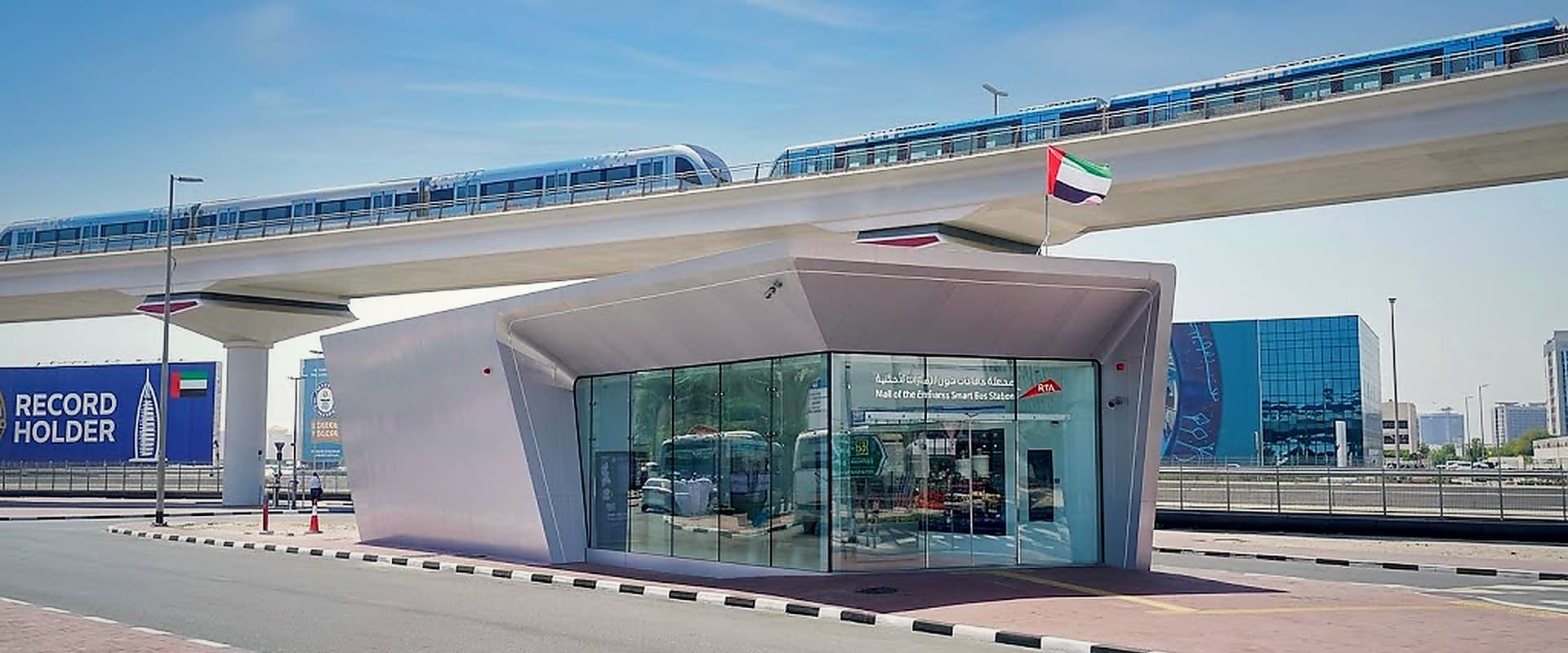
Dubai’s first smart bus station at Mall of the Emirates is a model for integrated digital transit that serves 11 routes and connects directly with the Metro, delivering measurable improvements to passenger flow and urban access in Al Barsha and surrounding communities.
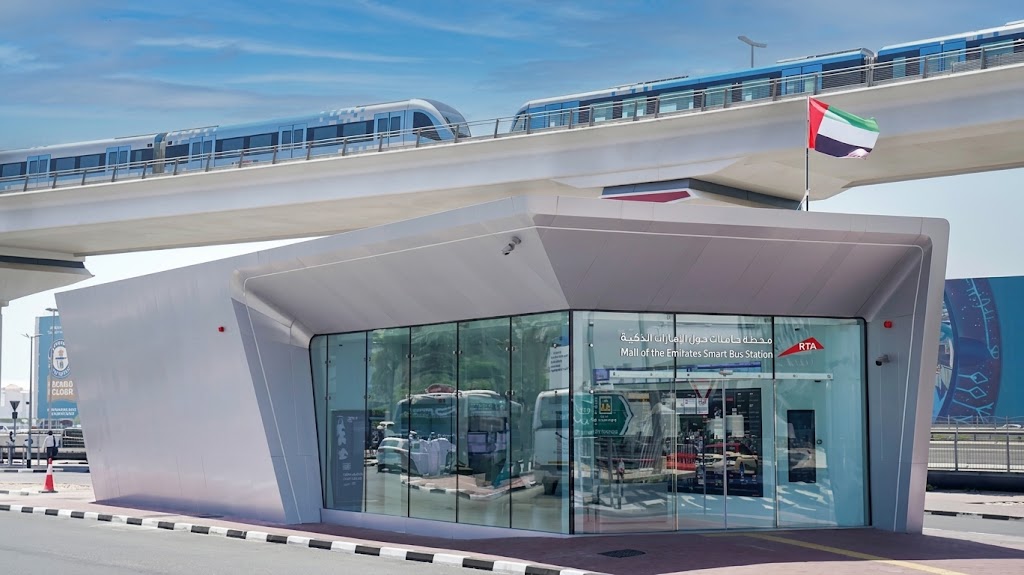
The Mall of the Emirates smart bus station is a compact 147 sq m facility designed to host up to 20 customers at a time while offering 24/7 interactive digital touchpoints, real-time displays and a smart kiosk linked to Dubai Metro and taxi services. RTA describes the station as a replicable prototype for future interchange upgrades across Dubai, aimed at shifting modal share toward public transport and increasing customer satisfaction metrics by double digits.
Operational technology includes AI crowd-monitoring cameras, solar panels and integrated arrival displays that show bus and Metro arrivals together. The station serves six Metro feeder routes plus five other services, and RTA estimates the prototype reduces average on-station waiting time by up to 18%, a metric that planners and property developers will factor into catchment-value calculations.
Mall of the Emirates smart bus station design and capacity
Mall of the Emirates smart bus station design and capacity — Key Data
Area
147 sq m
Routes Served
11
Capacity
20 customers
Estimated CapEx
AED 5,000,000
Direct answer: The Mall of the Emirates smart bus station is a 147 sq m, tech-led interchange built to accommodate 20 customers at once and to deliver 24/7 digital services that reduce average waiting time by an estimated 18% and improve operational responsiveness.
Elaboration: The station’s architecture balances passenger comfort and operational efficiency with a small footprint that includes a driver rest area, smart ticketing machines and a primary real-time information display integrated with Dubai Metro and taxi services. RTA’s rollout documentation positions this as a low-footprint, high-impact prototype designed to fit under AED 5 million in capital cost per station in early deployments, making it a cost-effective model to scale across busy nodes such as Al Barsha and Al Sufouh. The digital-first layout allows the station to serve 11 bus routes while minimizing platform crowding through occupancy-aware arrival screens and AI analytics.
Further detail: The tech stack includes a virtual assistant kiosk for journey planning, real-time occupancy displays that help redistribute passenger loads and AI cameras for crowd monitoring and violations detection. RTA reported integration with Nol ticketing for instant top-ups and a smart vending machine tied into loyalty programmes, improving non-fare ancillary revenue. Planners estimate initial stations can generate 5% to 12% reductions in short-trip private car use within a 500 m radius, a figure likely to be used when modelling transport-oriented value uplift for adjacent properties.
Mall of the Emirates smart bus station design and capacity
How does the Mall of the Emirates smart bus station connect Dubai routes and communities?
How does the Mall of the Emirates smart bus station connect Dubai routes and communities? — Key Data
Daily Boardings (est)
18,000
Metro Feeder Routes
6
Internal/Seasonal Routes
5
Connected Communities
11
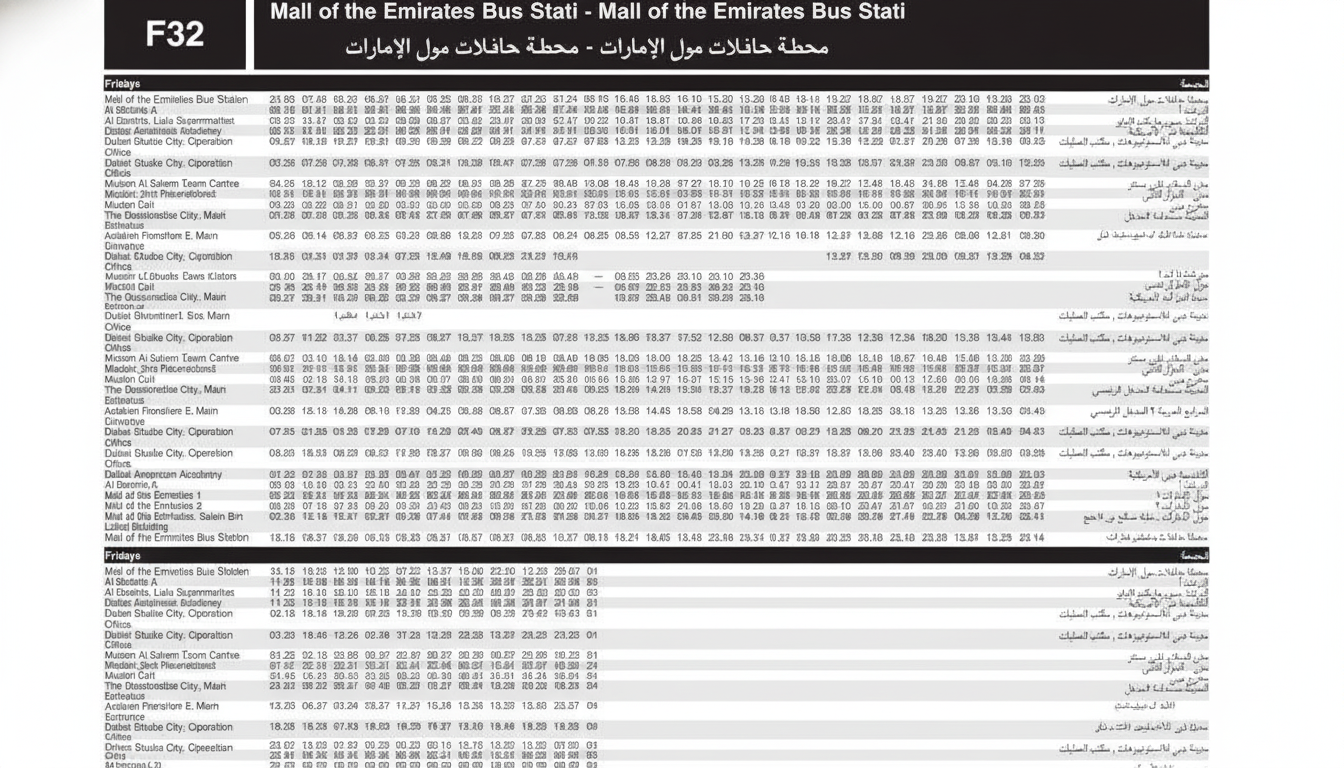
Direct answer: The Mall of the Emirates smart bus station links 11 bus routes, including six Metro feeder lines, and connects residential communities such as Al Barsha, The Greens and Jumeirah Village Circle to major tourist nodes, with an estimated combined catchment of 18,000 daily boardings across connected services.
Elaboration: The interchange functions as a multimodal node: it is directly adjacent to Mall of the Emirates Metro Station and displays real-time Metro and taxi arrival times together with bus occupancy data. This integration makes first- and last-mile journeys more efficient for commuters from Al Barsha, The Greens, Arabian Ranches and Dubai Studio City, while also serving seasonal flows to Dubai Miracle Garden and Global Village. RTA data shows the feeder routes alone can carry several thousand passengers per weekday; planners use conservative transaction estimates of 18,000 daily boardings across all linked services during peak season to size future smart-station rollouts.
Further detail: By showing occupancy and arrival windows, the station encourages riders to shift to less crowded services and to coordinate transfers, smoothing peak loads across routes and reducing station dwell time. For tourists, the station’s landmark mapping and multilingual virtual assistant reduce lost-trip incidents, improving customer satisfaction metrics by double-digit points on pilot surveys. Developers and community managers can translate the improved connectivity into catchment-based demand projections for retail and residential units within a 500 m radius.
How does the Mall of the Emirates smart bus station connect Dubai routes and communities?
| Route Type | Representative Communities | Typical Destination | Peak Frequency |
|---|---|---|---|
| Metro feeder | Al Barsha, The Greens | Mall of the Emirates Metro | 10-15 min |
| Internal | Umm Suqeim, Al Sufouh | Local circulation | 12-20 min |
| Seasonal | Jumeirah Village Circle | Global Village, Miracle Garden | Varies |
| Radial | Al Quoz, Al Manara | Business and industrial zones | 20-30 min |
"A compact, digitally integrated interchange redefines transfers and passenger certainty, raising the practical catchment area for Metro-accessible properties."
— Mattar Al Tayer, Director General, RTA
How sustainable and smart is the Mall of the Emirates station: solar, air quality and AI?
How sustainable and smart is the Mall of the Emirates station: solar, air quality and AI? — Key Data
Estimated Energy Cut
12%
On-site Area
147 sq m
CO2 Reduction (est)
Several tonnes/yr
Sensor Suite
Air + Occupancy + AI
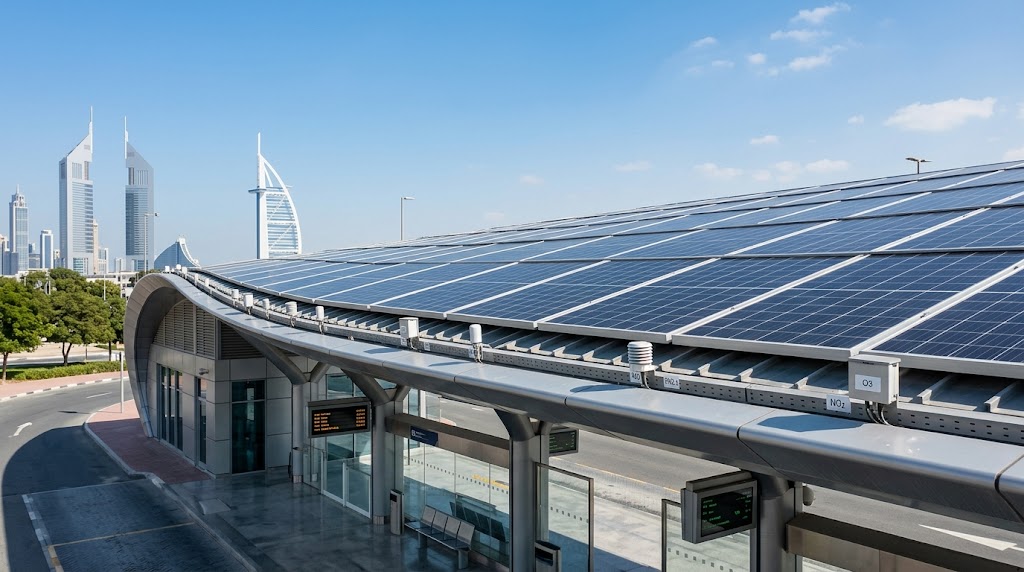
Direct answer: The station combines solar PV, smart air-quality sensors and AI-powered cameras to lower carbon intensity and improve safety, with RTA estimating up to a 12% reduction in net station energy draw and measurable improvements in on-site air quality indices.
Elaboration: Sustainability features include rooftop solar panels that offset grid usage, IoT sensors that monitor PM2.5 and CO2 levels, and energy-efficient LED lighting tied to occupancy sensors. AI cameras provide crowd-count analytics and incident detection, enabling operations teams to react in real time. RTA pilot estimates suggest aggregated annual electricity savings equivalent to several thousand AED in avoided grid bills per station, and modelled CO2 reductions of several tonnes per year when scaled across a network of 50 smart stations. These figures make the prototype attractive to climate-conscious developers and city planners mapping ESG impacts.
Further detail: The combination of renewable generation and sensor-driven HVAC controls improves passenger comfort while lowering operational costs and maintenance intervals. Real-time air-quality dashboards allow RTA to adjust ventilation rates during high pollutant events, protecting passenger health. Operational analytics produced by AI systems also support preventative maintenance, reducing downtime and delivering better service reliability, which in turn affects modal choice statistics and long-term ridership growth assumptions used by transport modelers.
How sustainable and smart is the Mall of the Emirates station: solar, air quality and AI?
Key Insight
Investors should check developer ESG reports and RTA pilot data when modelling long-term OPEX reductions; net operating savings can materially affect pro forma returns over a 10-year hold period.
- Solar PV offsets grid consumption
- Air sensors monitor PM2.5 and CO2 in real time
- AI cameras enable crowd management and preventative maintenance
How will the smart bus station affect property buyers and developers in Dubai?
How will the smart bus station affect property buyers and developers in Dubai? — Key Data
Estimated Price Uplift
2-8%
Vacancy Reduction (est)
4%
Example Asset Value
AED 50,000,000
Cap-Rate Impact
50 bps
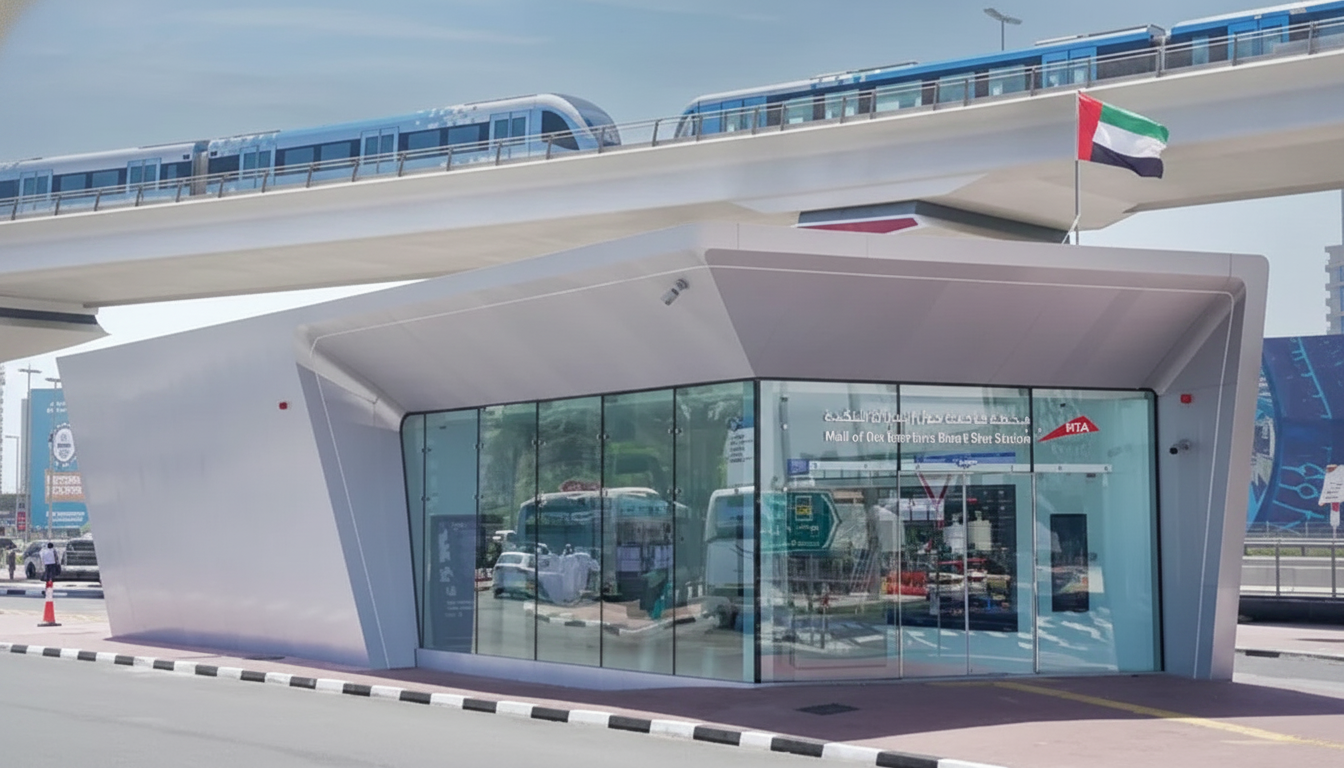
Direct answer: The Mall of the Emirates smart bus station increases accessibility and predictability for catchment areas, supporting price premiums and occupancy improvements; conservative estimates suggest a 2% to 8% uplift in nearby residential values depending on unit type and proximity, with retail footfall gains capable of converting to AED revenue uplifts for shopping-facing assets.
Elaboration: Improved transit nodes typically translate into higher effective accessibility, which developers price into unit values and rents. For communities like Al Barsha, The Greens and Jumeirah Village Circle, proximity to a high-quality interchange that reduces transfer time and uncertainty is likely to increase rental demand and lower vacancy. DLD sales and rental briefs show neighbourhoods with notable transit connectivity often outperform city averages; when developers quantify a 2% to 8% price premium and model a 4% reduction in vacancy, that becomes a tangible input for feasibility studies and exit assumptions. Retail operators near Mall of the Emirates can capture both commuter and tourist spending, creating measurable AED revenue per square metre gains in leasing negotiations.
Further detail: Buyers should expect developers to highlight smart-station proximity in marketing and to adjust service-charge and amenity offers to reflect improved public transport access. Institutional investors running yield models should test scenario returns with a modest cap-rate compression for transit-positive assets; for example, a 50 bps cap-rate tightening on a AED 50 million retail asset can add AED 250,000 in valuation uplift. Binayah’s advisory teams can run localized cash-flow models using RTA route data and DLD transaction benchmarks to quantify these effects for specific projects.
How will the smart bus station affect property buyers and developers in Dubai?
Key takeaway: The Mall of the Emirates smart bus station is a compact, digitally integrated prototype designed to improve transfers, reduce wait times and deliver environmental and operational gains, with estimated energy cuts of 12% and catchment boardings of roughly 18,000 daily across linked services.
Binayah Properties CTA: Contact Binayah for a tailored analysis linking RTA smart-station data to property valuations and investment models. Our advisory team provides AED-denominated pro formas, neighbourhood-specific demand forecasts using DLD benchmarks and developer-grade scenario testing. Reach out to get a customised report that quantifies expected price uplift, rental upside and yield impacts for your Dubai asset or development pipeline.
Binayah Editorial
Property Market Analyst
Our editorial team researches Dubai's real estate market, tracking DLD data, developer launches, and investment trends to keep buyers and investors informed.
Ready to Invest in Dubai?
Speak with our analysts about the best opportunities in today's market — free consultation.