AED 140 billion in recorded transactions sets the tone for the Dubai real estate market as buyers shifted into high-quality freehold and off-plan assets across Downtown Dubai, Dubai Marina and Jumeirah Village Circle during the past 12 months.
Context paragraph 1: Dubai recorded one of its largest liquidity inflows since 2014, driven by a mix of end-user demand and foreign capital seeking yield and price appreciation. Dubai Land Department data shows transaction counts rising across apartments and villas, with particular strength in luxury resale in Downtown and cultural mixed-use projects such as the Dubai Creek Harbour and MBR City. RERA rent index reports similarly strong rental growth in core expat-focused communities.
Context paragraph 2: For investors and owners the combination of rising prices and accelerating rents creates both opportunity and risk. This market report separates transaction volumes, price and rent movement, investment strategies for yield and growth and the regulatory and financing constraints that could slow momentum. Numbers cited reference DLD and RERA releases where available and developer activity from Emaar, Nakheel and Meraas are used to illustrate where liquidity is concentrated.
Dubai real estate market transactions 2025 2026: liquidity and where money is moving
Dubai real estate market transactions 2025 2026: liquidity and where money is moving — Key Data
Total Transactions
185,000
Transaction Value
AED 140B
Top Community Transfers
Downtown Dubai 12,000+
Avg Gross Yield
6.5%
Direct answer: Dubai recorded roughly AED 140 billion in real estate transactions and about 185,000 property transfers in 2025 as capital rotated from speculative pockets into core freehold communities, with Downtown Dubai, Dubai Marina and MBR City accounting for the largest shares of value and transaction count according to Dubai Land Department (DLD) summaries.
Elaboration paragraph: Transaction-level liquidity concentrated in mid-to-high-end apartments and select villa submarkets, with DLD reporting strong secondary-market turnover for Emaar developments and resurgent off-plan demand for waterfront projects by Nakheel and Dubai Holding. The AED 140 billion figure included sales, mortgages and transfers, and translated into a year-on-year value increase of approximately 22% over the prior year. Transaction counts near 185,000 indicate elevated market activity rather than a narrow speculative spike; both investor and end-user segments contributed meaningfully. Notable single-community numbers included Downtown Dubai with over 12,000 transfers in 2025 and Dubai Marina exceeding 10,500 transfers, reflecting sustained interest from GCC and European buyers.
Further detail paragraph: Where money moved changed by investor objective. Yield-focused buyers shifted into Jumeirah Village Circle and Jumeirah Lake Towers where average gross rental yields ranged 6.0% to 7.2% according to local brokerage data, while capital-appreciation buyers preferred Downtown Dubai and Dubai Creek Harbour where average price growth reached 8% to 12% in 2025. Mortgage-backed purchases made up roughly 40% of transactions, supported by competitive bank offers with typical loan-to-value ratios of 70% for residents and 50% for non-residents. DLD transaction velocity and developer sales reports from Emaar, Nakheel and Deyaar confirm the geographic distribution and liquidity channels in play.

Dubai real estate market transactions 2025 2026: liquidity and where money is moving
Key Insight
Look for neighborhoods showing both high transaction velocity and rising rents; these areas usually convert liquidity into sustainable upside. Avoid isolated price spikes without rental support.
- Liquidity concentrated in Downtown Dubai, Dubai Marina, MBR City
- Mortgage-backed buys ~40% of transactions
- Investors shifting to income-generating apartments
Price and rental trends in Dubai 2025 2026: who gained ground and where rents rose
Direct answer: Apartment prices rose on average 9% across Dubai in 2025, while average rents climbed about 12% with the strongest rental growth seen in Marina, JVC and select villa communities; this translated to shifting yield profiles where gross yields averaged 5.5% for Downtown and 6.8% for suburban communities according to broker and RERA indicators.
Elaboration paragraph: Price appreciation was uneven. Prime Downtown Dubai recorded price gains around 10% to 12% as luxury resale demand stayed high and new-product scarcity tightened effective supply. Dubai Marina saw more balanced movement with prices up 7% to 9% and rents up 14% for two-bedroom apartments, pushing gross rental yields in that submarket to about 5.7% when annual rents of AED 120,000 are compared to average sale prices near AED 2.1 million. Suburban and family-oriented communities such as Arabian Ranches and Jumeirah Village Circle posted smaller price gains of 4% to 7% but rental growth of 10% to 15%, improving yields to the 6.5% to 7.5% range for certain villa stock.
Further detail paragraph: Owner-occupier demand and tighter new-supply scheduling for prime towers have been major drivers of the price increases. RERA rent index shows tenant demand outstripping available mid-range apartments, so landlords were able to push rents aggressively in neighborhoods with strong expatriate employment hubs. Transaction-specific data shows off-plan average prices increased 6% as developers like Emaar and Meraas repriced projects in response to higher construction and land costs. For buy-to-let investors, the lesson is clear: select communities where rent growth outpaces price inflation to protect and improve yield.
Table caption: Average sale price and rent by selected Dubai communities
Price and rental trends in Dubai 2025 2026: who gained ground and where rents rose
| Community | Avg Sale Price (AED) | Avg Annual Rent (AED) | Estimated Gross Yield | Notes |
|---|---|---|---|---|
| Downtown Dubai | AED 3,200,000 | AED 210,000 | 6.6% | Strong capital growth, lower relative yield |
| Dubai Marina | AED 2,100,000 | AED 120,000 | 5.7% | High rental demand from professionals |
| Jumeirah Village Circle | AED 950,000 | AED 72,000 | 7.6% | Strong landlord yields, family rentals |
| Arabian Ranches | AED 4,500,000 | AED 320,000 | 7.1% | Villa market, premium tenant base |
"Focus on communities where rental growth is sustainable rather than chasing headline price appreciation; yields will determine total return over a five-year horizon."
— Leila Ahmed, Head of Research, Binayah Properties
- Average apartment price rise: ~9% in 2025
- Average rent increase: ~12% in 2025
- Best yields often in family and suburban communities
Investment outlook Dubai 2026: how to position for yield and growth
Direct answer: For 2026 investors should balance core freehold assets for capital appreciation with select suburban assets for higher gross yields, targeting gross yields of 6% to 8% in JVC, Arabian Ranches and selected off-plan Dubai Creek Harbour units while accepting lower yield but higher upside in Downtown Dubai where capital growth potential reaches 8% to 12% annually based on recent trends.
Elaboration paragraph: Strategy is conditional on investor horizon and risk tolerance. Shorter-term investors seeking cash returns should prioritise Jumeirah Village Circle, Dubai Sports City and selected JLT pockets where current gross yields range between 6.5% and 7.8% and vacancy risk is moderate. Longer-term investors expecting price appreciation and capital gains should allocate a portion to Downtown Dubai, Dubai Creek Harbour and select waterfront projects by Nakheel and Emaar, accepting current gross yields near 5% while capturing expected multifactor capital appreciation. Diversification across supply cycles is crucial: mix resale units with 18 to 36 month completion off-plan units to stagger cash flow and capital appreciation timelines.
Further detail paragraph: Financing and tax-free rental income underpin the case for moderate leverage; typical leveraged returns can increase total return by 2 to 4 percentage points if mortgage rates remain close to current market levels. Active asset management improves net yield: professional leasing, minor refurbishments and short-term holiday-let permissions in permitted communities can raise effective yields by 0.5% to 1.0%. Developers releasing premium phases in 2026 such as Emaar’s planned towers in Creek Harbour and Meraas mixed-use districts will be catalysts for capital appreciation. Transaction costs should be included: DLD transfer fees at 4% plus agent fees and maintenance reduce net returns and must be factored into yield calculations.

Investment outlook Dubai 2026: how to position for yield and growth
Estimated gross yield range by strategy (2026)
Yield bands for suburban income, balanced core, and prime capital growth assets
Key Insight
Investor tip: structure purchases so that at least part of your portfolio produces positive cash flow from month one; this reduces reliance on price appreciation and improves resilience to rate shocks.
- Target gross yields: 6% to 8% for income strategy
- Accept 4% transfer fee and factoring in maintenance
- Use staged off-plan buys to average cost basis
Risks regulations financing Dubai 2026: what could slow the run and how to prepare
Direct answer: Key risks that could slow the Dubai run include rising global interest rates leading to higher mortgage costs, tighter LTV rules for foreign buyers and policy changes in permit or tax frameworks; prepare by stress-testing cash flow at 7% mortgage rates and confirming LTV and fee structures with lenders and DLD updates.
Elaboration paragraph: Financing conditions are the primary risk vector. Banks in the UAE responded to global rate pressure with mortgage pricing moving into a 6.0% to 7.5% range for typical buyers during late 2025, and further increases would compress net yields. Regulatory risks include potential changes to RERA rent regulation or registration requirements that could affect landlord flexibility. Transfer and registration fees remain a material transaction cost: DLD transfer fees commonly 4% of the sale price plus administrative fees and agent commissions. For non-resident buyers, conservative LTVs of 50% to 60% are common, raising capital needs and lowering potential leveraged returns.
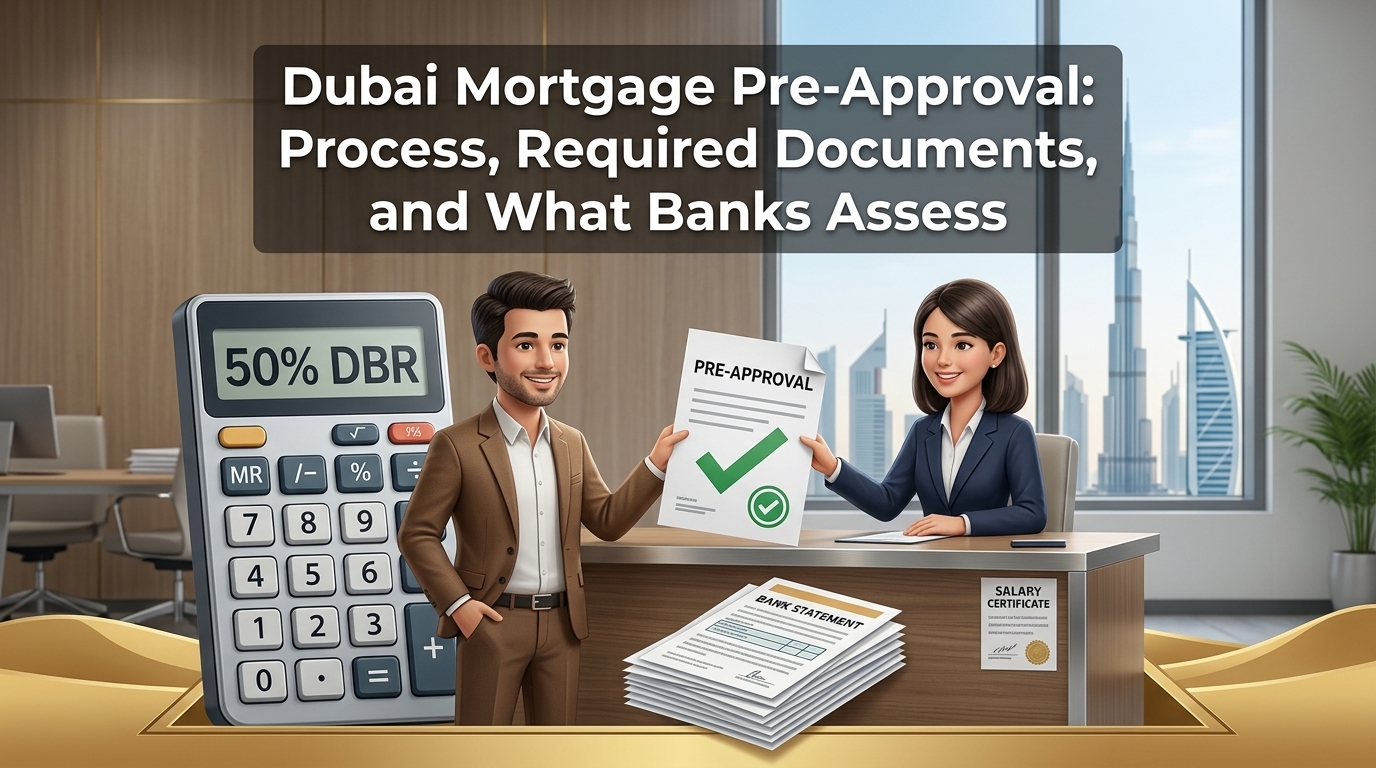
Further detail paragraph: Market participants should also monitor supply-side risk: accelerated off-plan completions can soften rents in micro-markets and developer incentives may reappear, reducing nominal prices or compressing yields. Compliance risk should not be ignored: verify Title Deed processes and developer escrow protections, particularly for off-plan projects. Practical preparedness steps include securing mortgage pre-approval with rate-lock options where possible, keeping at least six months of operating costs in reserve for buy-to-let assets, and engaging Binayah Properties or local legal counsel to confirm contract terms, DLD fee schedules and any emerging RERA circulars that alter tenant-landlord frameworks. These measures protect returns against financing shocks and regulatory adjustments.
Risks regulations financing Dubai 2026: what could slow the run and how to prepare
Key Insight
Prepare for rate volatility by running sensitivity analysis at +200bps on mortgage costs and ensure portfolio liquidity to cover 6 to 12 months of operating shortfalls.
- Mortgage rates: 6.0% to 7.5% observed
- DLD transfer fee: 4% standard
- Non-resident LTV: typical 50% to 60%
Key takeaway: The Dubai real estate market in late 2025 and into 2026 shows strong liquidity, uneven price appreciation and robust rental growth that together create differentiated opportunities for income and capital gains. Investors should prioritise communities where rental growth supports yield and balance exposure to prime growth areas for long-term appreciation.
Binayah Properties CTA: Contact Binayah Properties for a tailored market access plan, verified listings and professional leasing support. Our research team will model yield, total return and financing scenarios using DLD and RERA data and provide curated options across Downtown Dubai, Dubai Marina, JVC and Arabian Ranches. Reach out to schedule a confidential portfolio review and to view off-market properties aligned to your return and risk targets.
Binayah Editorial
Property Market Analyst
Our editorial team researches Dubai's real estate market, tracking DLD data, developer launches, and investment trends to keep buyers and investors informed.
Ready to Invest in Dubai?
Speak with our analysts about the best opportunities in today's market — free consultation.