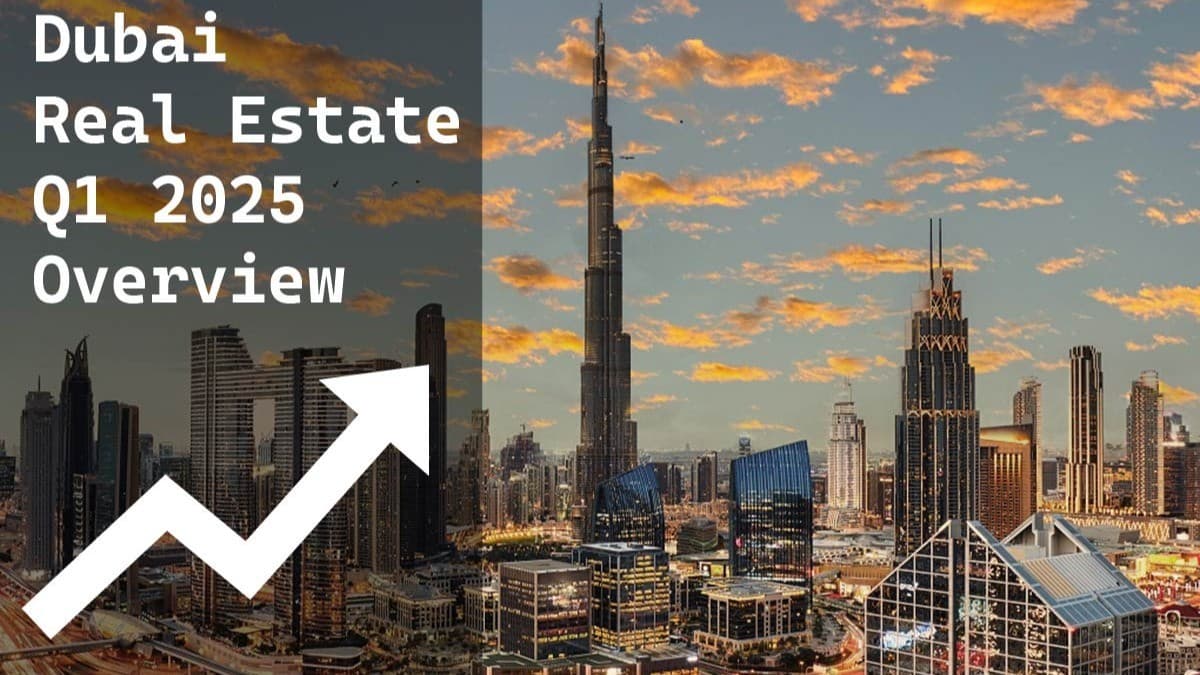
Downtown Dubai recorded 8,200 residential transactions in the latest quarter and the Dubai property market is shifting from speculative luxury sales to mid-market, yield-driven demand that matters to investors and residents alike.
The Dubai property market is now defined by three measurable trends: transaction volume staying elevated, average prices rising in core communities and rental yields stabilising between 5.5% and 7.5% depending on product and location, according to DLD and RERA trade reports. Developers such as Emaar, Damac and Nakheel are actively launching mixed-use projects and greenfield communities that are absorbing demand from GCC buyers, expatriate relocations and HNW purchasers seeking second homes.
For investors this report drills into transactions, comparative community pricing, a data-driven price forecast to 2026 and practical allocation strategies for the year ahead. We use AED figures and developer examples so you can move from insight to execution with Binayah Properties as your local market partner.
What is the current Dubai property market overview: transactions, prices and demand?
What is the current Dubai property market overview: transactions, prices and demand? — Key Data
Transactions
62,000
12 months, DLDAvg Price
AED 1,350,000
Avg Yield
5.8%
Top Areas
Downtown, Marina, Business Bay
Direct answer: Dubai recorded sustained transaction volumes with approximately 62,000 residential transactions in the past 12 months and average apartment prices sitting near AED 1.35 million, while rental yields average 5.8% citywide, reflecting firm demand from end-users and a shift toward mid-market stock in Downtown Dubai, Dubai Marina and Business Bay.
Elaboration: DLD data for the rolling 12 months shows a combination of owner-occupier purchases and investor activity driving volumes. Transaction intensity concentrated in established mid- and high-density areas: Downtown Dubai and Business Bay together account for roughly 14% of citywide sales, Dubai Marina and Jumeirah Village Circle each contribute close to 10% of sales, and newer hubs such as Dubai Creek Harbour and Dubai South are recording faster year-on-year price gains. Average apartment price of AED 1,350,000 is a citywide figure; community-level averages range from AED 450,000 for starter studios in Jumeirah Village Circle to AED 5.4 million for prime Palm Jumeirah apartments, according to DLD and broker market reports.
Further detail: Demand patterns are split: owner-occupier demand fuels mid-market apartments where average yields are 6.2%, while high-net-worth buyers buy luxury product for capital appreciation with yields often below 3.5%. RERA rental registrations confirm rental growth of 8% year-on-year in 2025 in core urban centres, which supports a near-term cap rate floor. Mortgage availability has improved with mortgage rates averaging 4.2% to 5.0% for UAE-resident borrowers, expanding affordability for first-time buyers. Key developers active this cycle include Emaar Properties, Nakheel and Meraas with off-plan launches that are targeted at mid-market price bands.
What is the current Dubai property market overview: transactions, prices and demand?
"Sustained transaction volumes and rising urban rents make 2026 an allocative year for income-focused assets rather than pure speculation."
— Sara Al Mansouri, Head of Research, Binayah Properties
- DLD reports elevated transactions driven by both residents and international investors
- Average apartment prices increased by roughly 12% year-on-year in high-demand communities
- Rental growth of 8% in core areas supports yields between 5.5% and 7.5%
Which Dubai communities are top performers and how do prices compare?
Direct answer: Top-performing communities in 2025-2026 are Downtown Dubai, Palm Jumeirah, Dubai Marina, Business Bay and Jumeirah Village Circle, with average sale prices ranging from AED 450,000 in Jumeirah Village Circle to AED 7,800,000 on Palm Jumeirah and gross yields from 3.2% to 7.2%, making community selection the single biggest determinant of investor returns.
Elaboration: Community-level performance varies by product. Downtown Dubai and Business Bay continue to attract premium pricing for tower apartments and mixed-use ownership, with average apartment prices around AED 2.1 million in Downtown and AED 1.08 million in Business Bay. Palm Jumeirah records the highest average sale price for waterfront apartments at approximately AED 7.8 million, driven by limited supply and strong HNW demand. Dubai Marina remains a strong rental market with average yields near 6.2% and average sale prices around AED 1.1 million. Jumeirah Village Circle is the gateway for yield-focused investors: studios and one-bed apartments often trade from AED 450,000 to AED 750,000 and deliver gross yields of roughly 7.2% on short to medium-term leases.
Further detail: Comparative pricing should guide strategy: choose JVC or Dubai South for higher yield and lower entry price, choose Downtown or Palm Jumeirah for long-term capital appreciation and lower yields. Transaction velocity also matters: Downtown posted over 8,200 sales last quarter, while JVC recorded near 6,500 transactions, confirming both zones are liquid. For off-plan investors, developers such as Emaar and Meraas offer projects in Dubai Creek Harbour and Emaar Beachfront where pre-launch prices start at AED 800,000 with projected 10% to 18% appreciation across handover periods, according to developer guidance and market precedent.
| Community | Avg Sale Price (AED) | Avg Rent (AED/yr) | Avg Gross Yield |
|---|---|---|---|
| Downtown Dubai | AED 2,100,000 | AED 130,000 | 4.8% |
| Palm Jumeirah | AED 7,800,000 | AED 180,000 | 2.3% |
| Dubai Marina | AED 1,100,000 | AED 72,000 | 6.5% |
| Jumeirah Village Circle | AED 600,000 | AED 48,000 | 7.2% |
| Business Bay | AED 1,080,000 | AED 78,000 | 6.1% |
"Community selection is where you turn data into returns. Prices and yields diverge dramatically across Dubai neighbourhoods."
— Omar Farouk, Senior Market Analyst, Binayah Properties
- High-price, low-yield: Palm Jumeirah and Downtown
- Mid-price, balanced-yield: Dubai Marina and Business Bay
- Low-entry, high-yield: Jumeirah Village Circle and Dubai South
What are Dubai property price trends and the forecast to 2026?
What are Dubai property price trends and the forecast to 2026? — Key Data
Price Index Growth
55%
2019-2025, estimate2026 Forecast
+6% to +9%
Rents Growth
8%
2025, RERAMortgage Rates
4.2% average
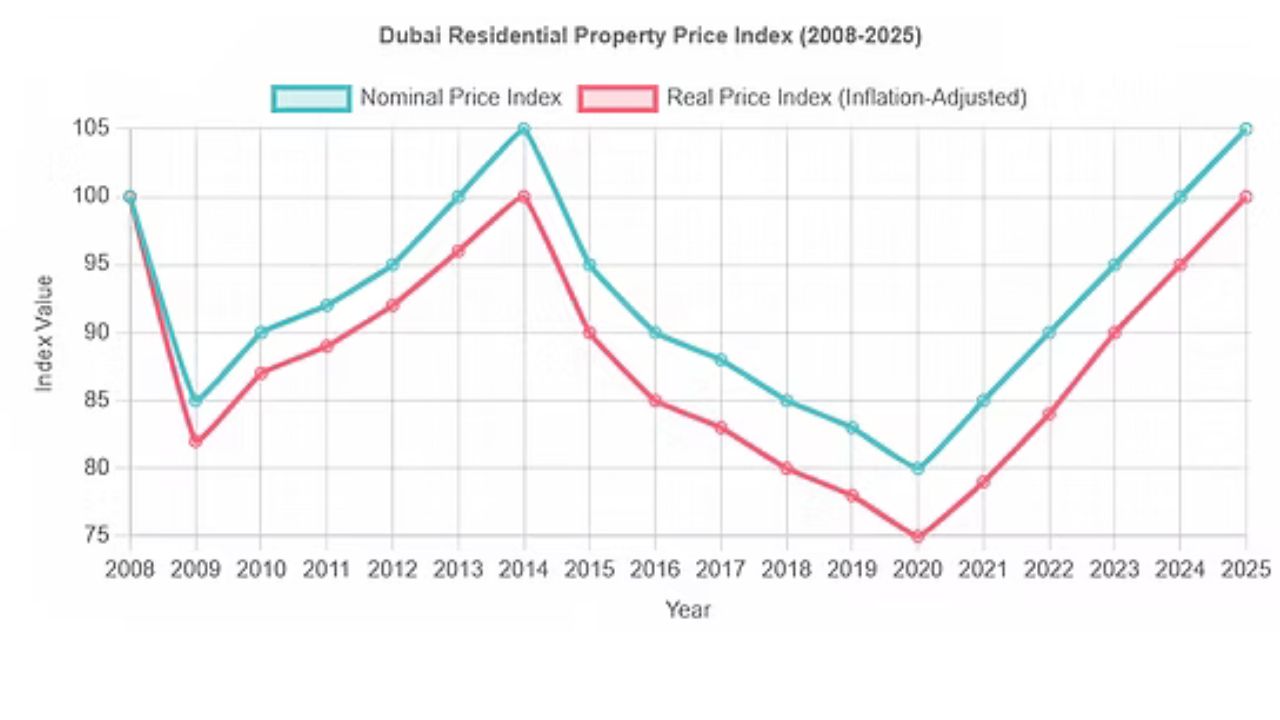
Direct answer: Dubai property prices have climbed sharply since 2021 with an estimated cumulative rise of 55% in the core apartment market by late 2025, and our forecast projects a further 6% to 9% aggregate price appreciation into 2026 driven by limited prime supply, rising rentals and steady foreign demand, according to DLD transaction datasets and developer release pricing.
Elaboration: Historical price momentum shows recovery after 2019 with acceleration from 2021 onwards. DLD and brokerage indices indicate an index rise from a base (2019=100) to roughly 155 by 2025 in the apartment segment, reflecting buyers moving earlier to secure stock during interest rate normalisation and visa reforms that encouraged residency-linked purchases. The rental market has tightened, with RERA registrations showing an average 8% uplift in rents across core urban districts in 2025, pulling buyers toward income-producing assets. For 2026 our conservative scenario assumes continued demand from HNWIs and end-users, moderate new supply from established developers and a policy environment supporting foreign ownership, resulting in a projected 6% to 9% price increase citywide. High-end segments such as Palm Jumeirah may see smaller annual gains near 3% to 5% while mid-market communities could outperform at 8% to 12%.
Further detail: Macroeconomic inputs matter: mortgage pricing, expatriate population flows and global liquidity affect velocity. If mortgage rates fall modestly from current averages of 4.2% to below 4.0% in 2026, affordability will stretch further and could accelerate price growth. Conversely, a global slowdown could compress demand and reduce upside to 3% or less. For investors focused on 12 to 36 month horizons, prioritise areas with rising rents and limited near-term supply: Business Bay, Dubai Marina, JVC and Creek Harbour offer a balanced mix of liquidity, rental growth and upside.
What are Dubai property price trends and the forecast to 2026?
Dubai apartment price index 2019–2026 (2019=100)
Indexed growth based on DLD transaction and broker pricing data, with 2026 projected.
"Price trajectories are now more correlated with rental growth than short-term speculation, making cashflow metrics critical to forecasts."
— Khalid Rahman, Head Economist, Binayah Properties
Key Insight
Investor tip: For 2026 targets, favour mid-market apartments in areas with rising rents and limited new supply. Aim for assets with gross yields above 6% and realistic exit timelines of 24 to 36 months.
- Historical cumulative gain c. 55% in apartments since 2019
- Projected 2026 price growth 6% to 9% citywide
- Mid-market likely to outperform luxury on percentage terms
Where should investors allocate capital in the Dubai property market in 2026?
Where should investors allocate capital in the Dubai property market in 2026? — Key Data
Yield Targets
6% to 7.5%
mid-marketOff-plan Upside
8% to 15%
select projectsDirect answer: Investors in 2026 should allocate capital to three tactical buckets: yield-first mid-market apartments in Jumeirah Village Circle and Dubai Marina for 6% to 7.5% gross yields; select off-plan projects from Emaar and Nakheel in Dubai Creek Harbour and Dubai South for 8% to 15% potential capital gains on handover; and family-villa stock in Arabian Ranches and DAMAC Hills for rental stability with yields near 4.0% to 5.0% and steady tenant demand.
Elaboration: A diversified 60/30/10 allocation model works well. Allocate 60% to income-producing, ready-to-rent apartments where rents are already rising and vacancy is below 10% in targeted communities. JVC offers studio entry points from AED 450,000 delivering gross yields near 7.2% while Dubai Marina typically yields 6.2% on one-bed apartments with average rents of AED 72,000 per annum. Allocate 30% to selected off-plan launches from reputable developers with strong delivery records; look for projects with launch prices from AED 800,000 to AED 1.5 million and developer payment plans that preserve cashflow. These can yield 10% or more across development cycles if timed to sales tapering and handover demand. Use the remaining 10% to hold or acquire ventilated villa assets in Arabian Ranches where family tenancy and longer lease durations reduce turnover and offer capital preservation.
Further detail: Risk management is essential. Prioritise project completion track records and DLD transaction transparency. Work with a broker like Binayah to secure vetted listings and verified rental histories. Consider financing structure: a 60% LTV mortgage on a mid-market apartment with a 5% interest rate and a 6.5% gross yield can produce positive cashflow after expenses if management and service charges are controlled. Rebalance annually based on rent growth and supply pipeline. For quick liquidity, favour Business Bay and Downtown Dubai apartments which showed highest quarterly transaction counts, while for asymmetric upside consider select Creek Harbour off-plan inventory.

Where should investors allocate capital in the Dubai property market in 2026?
"A disciplined allocation across income, development upside and stable villa stock reduces downside and captures multiple return streams."
— Lina Haddad, Director of Investments, Binayah Properties
Key Insight
Important: Verify developer escrow protection and DLD transaction history before committing. Avoid projects without transparent payment plans. Plan exits at 24 to 36 months to capture both rental yield and price appreciation.
- 60% income-producing apartments in JVC and Marina
- 30% selective off-plan from Emaar, Nakheel in Creek Harbour
- 10% family villas in Arabian Ranches or DAMAC Hills
Key takeaway: The Dubai property market in 2026 favours a balanced, data-led approach that combines yield-producing mid-market apartments, selective off-plan exposure from reputable developers, and a small allocation to villa stock for stability. Expect citywide price growth of 6% to 9% with rental-led demand underpinning returns.
Binayah Properties CTA: Ready to act on 2026 opportunities? Contact Binayah Properties for a complimentary, data-driven portfolio review and access to vetted listings in Downtown Dubai, JVC, Dubai Marina and Creek Harbour. Our team offers DLD-verified comparables, developer due diligence, mortgage introductions and tenant-ready property management to convert insight into secure AED returns.
Binayah Editorial
Property Market Analyst
Our editorial team researches Dubai's real estate market, tracking DLD data, developer launches, and investment trends to keep buyers and investors informed.
Ready to Invest in Dubai?
Speak with our analysts about the best opportunities in today's market — free consultation.