Make it With ADNOC: 10 outcomes boosting UAE industry
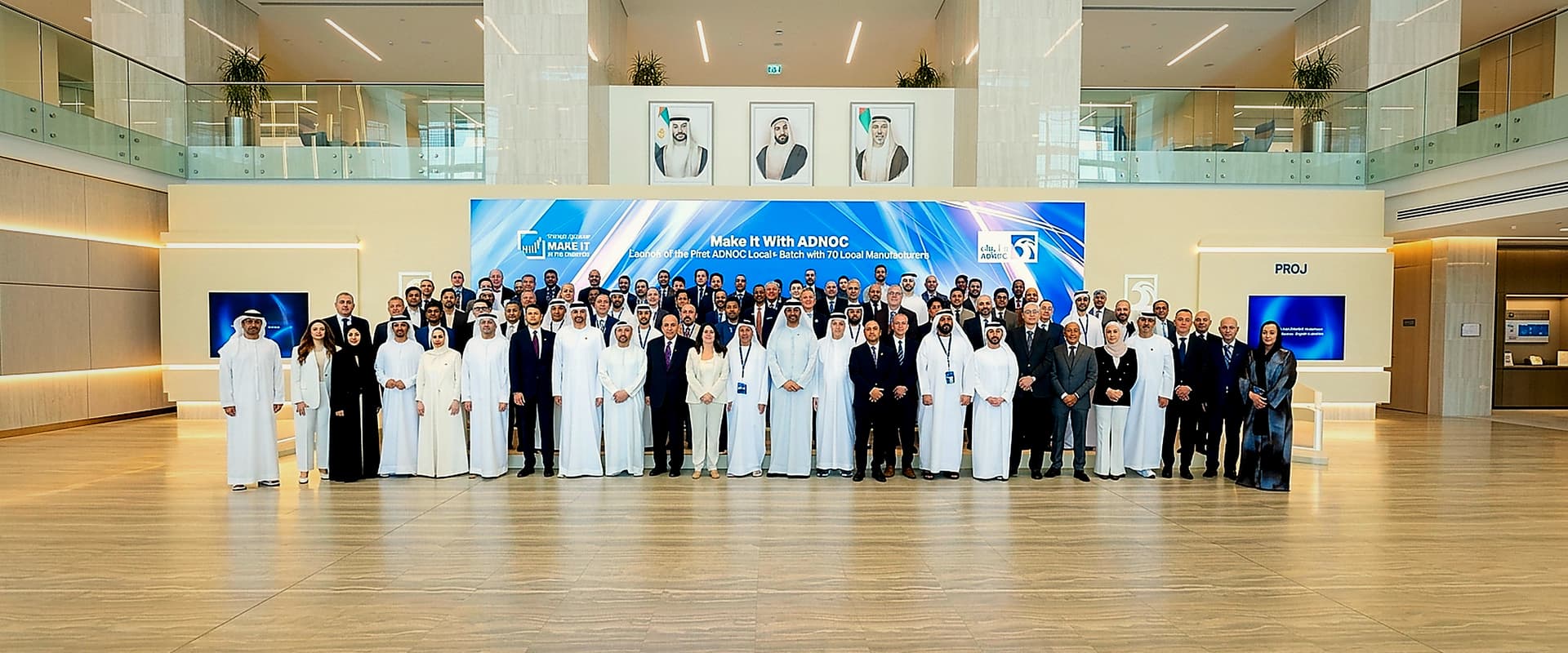
At ADNEC in Abu Dhabi, the Make it With ADNOC forum on May 4 gathered 400 attendees and 70 vetted UAE manufacturers to match contractors with suppliers and unveil AED 200 billion in planned project awards.
The forum signalled a decisive execution phase for ADNOC’s five-year CAPEX plan and the UAE’s Make it in the Emirates industrial push. ADNOC confirmed AED 200 billion of new project awards scheduled for 2026 to 2028, a pipeline spanning upstream and downstream projects that will create supplier demand across fabrication, modules, valves, steel and engineered components.
This briefing breaks down 10 practical takeaways investors, developers and suppliers need to know now, with project values, partner counts and the action items that position businesses to win contracts and secure supply-chain roles in Abu Dhabi and the wider Gulf Industrial Arc.
What happened at the Make it With ADNOC forum that matched contractors and manufacturers?
What happened at the Make it With ADNOC forum that matched contractors and manufacturers? — Key Data
Planned Awards
AED 200 billion
Manufacturers
70
Attendees
400+
Project Years
2026-2028
Direct answer: The forum matched top EPC contractors with 70 prequalified UAE manufacturers and more than 400 industry delegates to accelerate delivery of AED 200 billion in project awards planned for 2026 to 2028.
Elaboration paragraph: ADNOC used the event to operationalise its Local+ list under the In-Country Value framework, providing early visibility into a multi-year project pipeline worth AED 200 billion (about USD 55 billion) and spanning upstream rigs, midstream facilities and downstream chemical and refining modules. Over 400 attendees included government entities, EPC contractors and private sector suppliers; the format focused on one-to-one meetings, technical briefings and procurement timelines so local manufacturers can gear up production lines, secure recurring contracts and meet ADNOC’s technical and quality standards.
Further detail paragraph: For investors and real-estate developers, the forum clarifies where manufacturing demand will concentrate: steel fabrication yards, precision machining, piping and module assembly near Abu Dhabi and designated industrial zones. ADNOC’s early engagement model increases contract predictability and reduces tender uncertainty, helping suppliers plan CAPEX. Event outcomes point to accelerated procurement decisions across the 2026–2028 window and heightened opportunities for SMEs and joint ventures with international EPC firms.
Key Insight
Prepare capability statements and certified QA/QC documentation ahead of ADNOC’s Meet the Buyer events; ADNOC prioritises suppliers who can demonstrate immediate serial production capacity and documented technical certifications.
- Early partner engagement shortens lead times
- Made in the Emirates preference increases local contracting
- EPC-local manufacturer pairings reduce supply-chain risk
What is Local+ and who is on ADNOC's preferred supplier list?
Direct answer: Local+ is ADNOC’s curated preferred-supplier list of local companies that meet specific technical, quality and capacity standards to supply the company’s projects, and 70 UAE manufacturers were presented at the forum as Local+ candidates.
Elaboration paragraph: Local+ sits under ADNOC’s In-Country Value (ICV) program and identifies suppliers who have passed qualification thresholds for equipment, fabrication, materials and services. Being on Local+ increases the likelihood of ADNOC project awards by offering preferred access to tendering windows and prequalification fast-tracks. ADNOC’s Local+ focus results in measurable in-country spend: the company’s CAPEX plan channels AED 200 billion of project awards in 2026–2028 that will prioritise Local+ vendors for module packages, valves, structural steel and specialized engineering components.
Further detail paragraph: For UAE SMEs, Local+ status reduces bidding friction but requires investments in certified processes and capacity scaling. ADNOC’s Local+ list emphasises traceability, manufacturing lead times and documented performance on previous projects. Suppliers not yet on Local+ can access ADNOC Value Connect events to demonstrate capability and meet EPC buyers, increasing chances to capture portions of the multi-billion-AED pipeline.
| Supplier Category | Typical Contract Value (AED) | Key Capability |
|---|---|---|
| Structural Steel Fabricators | 20,000,000+ | Module and skid fabrication |
| Machining and Valve Suppliers | 5,000,000+ | Precision components and valves |
"Local+ converts qualification into procurement opportunity; suppliers that demonstrate serial delivery will capture most downstream scopes."
— Senior EPC Procurement Director, Abu Dhabi
How does In-Country Value policy drive local industry growth?
How does In-Country Value policy drive local industry growth? — Key Data
ICV Spend Impact
AED 200 billion
Local Manufacturers
70
Job Creation
Projected thousands
Project Window
2026-2028
Direct answer: ADNOC’s In-Country Value policy drives local industry growth by prioritising UAE-made goods and services in procurement, leading to increased domestic manufacturing activity and targeted CAPEX allocation such as AED 200 billion in upcoming awards.
Elaboration paragraph: ICV ties procurement decisions to tangible local economic outcomes: jobs, supplier development and capital investment. ADNOC’s ICV initiatives mean that large EPC packages are structured to favour suppliers demonstrating local manufacturing content, certified local employment quotas and reinvestment plans. This promotes construction of fabrication yards, tooling investment and quality-management systems inside the UAE. ADNOC’s 2026–2028 pipeline creates predictable order books for manufacturers, enabling them to justify facility expansions and workforce training programs.
Further detail paragraph: The policy creates multiplier effects across real estate and logistics: industrial land values near Abu Dhabi and Kizad are likely to rise as manufacturers scale. For investors the implication is measurable: projects that align with ICV priorities can secure multi-year contracts, improving revenue visibility and raising asset utilisation rates. Suppliers that align with ICV typically see faster payment cycles and recurring orders, translating into revenue growth and improved credit metrics for bank financing.
Key Insight
Supplier investment in accredited QA systems and documented local content percentages materially improves scoring in ICV-weighted procurement evaluations.
- ICV links procurement to local job creation
- Predictable pipelines enable CAPEX decisions
- Real-estate near industrial hubs benefits from demand
What role does UAE leadership play in ADNOC's strategy?
Direct answer: UAE leadership provides strategic direction and mandates that accelerate ADNOC’s execution pace and in-country value ambitions, including the ambition to prioritise ‘Made in the Emirates’ suppliers across AED 200 billion of planned awards.
Elaboration paragraph: Senior government guidance, led by Dr Sultan Ahmed Al Jaber in his dual role as UAE Minister of Industry and Advanced Technology and ADNOC CEO, establishes policy alignment between industrial development and national energy strategies. Leadership directives formalise target outcomes such as increased domestic manufacturing capacity, export readiness and supply-chain resilience. These directives underpin ADNOC’s five-year CAPEX plan and create the governance necessary for predictable procurement and enhanced accountability across EPC delivery chains.
Further detail paragraph: For investors and regional partners, the leadership signal reduces political and policy risk around ADNOC projects by embedding industrialisation objectives into procurement frameworks. Government backing supports incentives, infrastructure allocation and coordination among ministries including the Abu Dhabi Investment Office and the Ministry of Industry and Advanced Technology. The result is a coordinated pipeline where AED amounts and procurement timetables are anchored to national policy, increasing the likelihood of on-time project execution and local supplier uptake.
"Strategic leadership alignment transforms procurement intent into deliverable industrial programmes."
— Dr Sultan Ahmed Al Jaber, ADNOC MD & UAE Minister
Key Insight
Track ministerial announcements and ADNOC procurement calendars; policy endorsements translate into tangible contract flows and infrastructure prioritisation.
- Leadership provides execution mandate
- Policy reduces procurement uncertainty
- Inter-ministry coordination unlocks incentives
What is ADNOC Value Connect 'Meet the Buyer' for SMEs?
What is ADNOC Value Connect 'Meet the Buyer' for SMEs? — Key Data
Participants
1,000+ companies
Event Dates
May 5-6
Direct answer: ADNOC Value Connect ‘‘Meet the Buyer’’ is a matchmaking event designed to connect over 1,000 companies, particularly SMEs, directly with EPC contractors and key suppliers to convert capability into contracts and joint-venture opportunities.
Elaboration paragraph: Scheduled as part of the Make it in the Emirates forum on May 5 and 6, ADNOC Value Connect enables SMEs to attend targeted procurement sessions, technical reviews and one-on-one buyer meetings. The event is structured to fast-track qualification and discoverable scopes tied to ADNOC’s multi-year pipeline. ADNOC anticipates more than 1,000 companies participating, creating a high-probability environment for SMEs to secure frameworks and subcontracts that feed into larger AED-denominated project awards.
Further detail paragraph: For SME landlords, logistics providers and investors, Value Connect clarifies near-term demand by EPC category and contract size. SMEs that prepare certified assembly lines, quality records and bankable performance guarantees increase their win rates. ADNOC’s performance-based partnership model often translates into multi-year master service agreements that stabilise revenue and support credit profiles, enabling SMEs to raise financing and expand capacity in response to confirmed ADNOC-backed demand.
"Meet the Buyer moves SMEs from visibility to pipeline integration; it is where capability meets contract opportunity."
— Head of ADNOC Procurement
Key Insight
SMEs should bring audited capacity statements, NDT certifications and sample delivery schedules to buyer meetings to increase selection probability.
- Direct buyer access reduces procurement lead time
- SMEs can secure framework agreements
- Event outcomes inform near-term CAPEX planning
Why is ADNEC the exhibition hub hosting Make it in the Emirates?
Direct answer: ADNEC was selected as the exhibition hub for Make it in the Emirates because it offers large-scale halls, secure exhibition infrastructure and proximity to Abu Dhabi’s industrial zones, enabling effective engagement for hundreds of suppliers and buyers supporting AED 200 billion in project awards.
Elaboration paragraph: ADNEC’s facilities can host thousands of delegates, heavy-equipment displays and technical demonstrations that are essential for EPC-supplier matchmaking. The venue’s logistics capability, bonded exhibitor services and proximity to transport arteries and industrial clusters make it suitable for showcasing fabrication capabilities and module mock-ups. ADNEC’s selection reduces friction for foreign EPCs and local manufacturers to inspect samples, perform prequalification audits and finalise procurement terms related to ADNOC’s 2026–2028 CAPEX plan.
Further detail paragraph: For real estate investors, ADNEC’s role enhances the value proposition of nearby industrial lands, logistics estates and developer-led manufacturing freezones. The concentration of buyers and sellers at ADNEC improves deal velocity and provides a predictable calendar of procurement milestones that align with ADNOC’s award timelines, making it easier to forecast demand for warehousing and light-industrial property adjacent to the event hub.
Key Insight
Proximity to ADNEC can be a pricing premium for logistics and industrial leases; plan for higher occupancy when forums are scheduled.
- ADNEC supports heavy-equipment displays
- Bonded services facilitate international suppliers
- Nearby industrial real estate sees demand spikes
What is the role of UAE Ministry of Industry and Advanced Technology in Local+?
What is the role of UAE Ministry of Industry and Advanced Technology in Local+? — Key Data
Agency Support
Grants and training
Alignment
ADNOC procurement policy
Direct answer: The Ministry of Industry and Advanced Technology sets policy and incentives that enable Local+ by certifying manufacturing capabilities, coordinating industrial policy and supporting supplier development to capture portions of ADNOC’s AED 200 billion pipeline.
Elaboration paragraph: The ministry provides standards, industrial cluster strategies and capability-building initiatives that align suppliers with ADNOC requirements. It facilitates grants, training programmes and technology transfer agreements that enable SMEs to meet technical and safety thresholds required for inclusion on Local+. These measures reduce time-to-qualification for local manufacturers and increase the pool of reliable vendors for EPC contractors bidding on ADNOC projects.
Further detail paragraph: For investors, ministry involvement de-risks supplier investments by offering matching grants and export-promotion frameworks that enhance supplier competitiveness. The ministry’s coordination with ADNOC and the Abu Dhabi Investment Office ensures that facility build-outs and workforce development track actual procurement needs, improving the probability that an SME will convert capability investments into AED-denominated contracts within the 2026 to 2028 award window.
"Policy alignment between industry and oil-sector procurement accelerates supplier readiness."
— Senior Official, Ministry of Industry & Advanced Technology
Key Insight
Engage ministry programs early to access capacity-building grants and certification pathways needed for Local+ eligibility.
- Ministry provides technical certifications
- Supports export and scale-up for SMEs
- Aligns industrial clusters with procurement demand
Why is UAE Ministry of Culture involved in industrial identity?
Why is UAE Ministry of Culture involved in industrial identity? — Key Data
Branding
Made in the Emirates
Support
Export promotion
Direct answer: The Ministry of Culture helps shape the narrative and national branding for ‘Made in the Emirates’, ensuring cultural endorsement of industrial growth and export identity as ADNOC scales local manufacturing for AED 200 billion in projects.
Elaboration paragraph: Cultural buy-in is an often-overlooked component of industrial strategy. The Ministry of Culture’s involvement supports campaigns that elevate Emirati-made products, strengthens national procurement preference for local content and promotes export branding. This public-facing element boosts domestic acceptance of industrial activities and helps local suppliers differentiate their products in regional and global markets as ‘Made in the Emirates’ becomes a quality signal tied to ADNOC-backed projects.
Further detail paragraph: For developers and manufacturers, cultural endorsement enhances marketability and can improve commercial uptake in regional trade shows and export channels. The ministry’s role also helps align public perceptions around industrial zones and manufacturing hubs, reducing community resistance and supporting talent attraction for factory workforces needed to deliver ADNOC-awarded scopes during the 2026–2028 timeframe.
"National identity and industrial ambition must travel together to build sustainable manufacturing pride."
— Cultural Affairs Director, UAE Ministry of Culture
Key Insight
Use ‘Made in the Emirates’ branding in bids where applicable; it can influence both selection and commercial perception among regional buyers.
- Cultural endorsement increases local acceptance
- Branding boosts export competitiveness
- Reduces community pushback for industrial projects
How does Abu Dhabi Investment Office finance the scale-up of local suppliers?
How does Abu Dhabi Investment Office finance the scale-up of local suppliers? — Key Data
Incentives
Grants and co-investment
Financing Support
ADIO-led programmes
Direct answer: The Abu Dhabi Investment Office provides financing support, incentives and investor matchmaking that help suppliers scale operations to pursue portions of ADNOC’s AED 200 billion project pipeline.
Elaboration paragraph: ADIO offers grant schemes, co-investment options and regulatory guidance to reduce the financial barrier to factory build-outs, equipment purchases and workforce training. By improving supplier credit profiles and attracting foreign direct investment into manufacturing, ADIO increases the number of bankable UAE suppliers who can meet EPC payment terms and performance guarantees. ADIO’s role is pivotal for converting procurement intent into operational capacity, enabling SMEs to bid on AED-denominated contracts with stronger balance sheets.
Further detail paragraph: For real-estate developers and investors, ADIO-backed projects often qualify for accelerated permits and infrastructure support, which shortens construction timetables for industrial facilities. Suppliers that secure ADIO support typically demonstrate improved contract win rates and enhanced access to export markets. ADIO-facilitated financing and incentives therefore act as force multipliers, enabling a faster scale-up to meet ADNOC’s 2026–2028 award schedule.
"Finance and incentives transform supplier intent into physical capacity in months rather than years."
— Investment Director, Abu Dhabi Investment Office
Key Insight
Consider ADIO grants and accelerated permit routes when modelling industrial CAPEX payback on manufacturing-site investments.
- ADIO reduces financing gaps for SMEs
- Incentives accelerate facility build-outs
- Improved bankability raises contract win rates
How are EPC contractors engaged early and held accountable?
Direct answer: EPC contractors are engaged early through ADNOC’s partner-matching forums and are held accountable via performance-based contracting, governance measures and delivery milestones tied to payment and future tender access.
Elaboration paragraph: ADNOC’s forum model encourages EPCs to meet local manufacturers during the design and procurement windows, enabling co-development of package scopes and shared risk allocations. Performance-based partnerships include milestone-based payments, warranties and contractual KPIs tied to safety, quality and schedule adherence. These contractual mechanisms reduce downstream change-orders and incentivise on-time delivery, increasing predictability for suppliers and lowering EPC risk premiums on AED-denominated project budgets.
Further detail paragraph: For suppliers and investors, early EPC engagement means clearer scope definitions and better coordination on logistics and fabrication sequencing, which reduces inventory holding costs and shortens lead times. Accountability clauses in EPC contracts can translate into faster dispute resolution and clearer recourse if performance metrics are missed, thereby improving cash-flow certainty for subcontractors and raising the probability of sustained revenue streams across the 2026–2028 award window.
"Early EPC engagement aligns execution capability with procurement intent, reducing schedule slippage."
— Lead Project Director, Major EPC
Key Insight
Request EPC procurement schedules and KPI templates during qualification to align factory output plans with contract milestones.
- Performance-based payments improve supplier cash flow
- Early technical alignment reduces scope creep
- Governance frameworks speed dispute resolution
How will manufacturing scale up along the Gulf Industrial Arc?
How will manufacturing scale up along the Gulf Industrial Arc? — Key Data
Corridor Demand
Rising industrial occupancy
Expected Utilisation
80%+
Direct answer: Manufacturing will scale up along the Gulf Industrial Arc through targeted facility investments, industrial land allocation and coordinated supplier development to meet AED 200 billion of ADNOC project awards and wider regional demand.
Elaboration paragraph: The Gulf Industrial Arc concept connects Abu Dhabi, Kizad and nearby logistics hubs into a manufacturing corridor capable of serial fabrication, module assembly and export logistics. ADNOC’s procurement certainty and ICV incentives support investments in high-capacity yards and specialised workshops. Private developers and institutional investors are positioning land and build-to-suit facilities to capture tenant demand from suppliers needing proximity to ports, staging yards and EPC assembly zones.
Further detail paragraph: For investors and occupiers, scale-up metrics are tangible: demand for heavy industrial leases and logistics warehouses is expected to rise in the mid-2020s with utilisation rates pushing above 80% in prime pockets once ADNOC awards flow. The combined effect is improved industrial land valuations, strengthened rental yields for build-to-suit assets and enhanced exit prospects for developers who align projects with ADNOC award timelines and Local+ supplier needs.
"A connected industrial arc creates economies of scale necessary for competitive module fabrication."
— Industrial Real Estate Analyst, Abu Dhabi
Key Insight
Map logistics lead times to assembly schedules; proximity to ports and EPC yards can reduce landed costs by up to 15% for heavy modules.
- Industrial land demand will rise near Abu Dhabi
- Build-to-suit options attract supplier tenants
- Higher utilisation supports stronger yields
How does ADNOC strengthen supply chain resilience to reduce import dependence?
How does ADNOC strengthen supply chain resilience to reduce import dependence? — Key Data
Import Reduction
Localisation priority
Supplier Base
70 prequalified firms
Direct answer: ADNOC strengthens supply chain resilience by prioritising local sourcing, expanding Local+ coverage and fostering long-term performance-based partnerships that reduce reliance on imported modules and equipment over the 2026–2028 award window.
Elaboration paragraph: By matching EPCs with 70 prequalified local manufacturers and providing visibility on AED 200 billion in upcoming awards, ADNOC creates incentives to shift production pipelines to the UAE. Localising production shortens lead times, lowers freight and insurance costs and limits exposure to international logistics disruptions. ADNOC’s approach includes supplier development, certification support and staged contract awards that reward consistent on-time delivery and quality, thereby anchoring capability domestically and strengthening regional supply sovereignty.
Further detail paragraph: For procurement-sensitive investors this reduces single-source risk and improves overall schedule confidence on major projects. A resilient local supply base also supports secondary markets such as equipment servicing, spare parts distribution and industrial property leasing. The practical outcome is lower import dependence, improved fiscal multiplier from domestic spend and a stronger industrial ecosystem that can bid on export opportunities beyond ADNOC’s network.
Projected Local Content Uptake 2024-2028
Estimated increase in UAE-sourced value in ADNOC projects
"Localising key scopes is not just economic policy; it is a resilience strategy for critical national infrastructure."
— Supply Chain Resilience Lead, ADNOC
Key Insight
Diversify supplier bases and develop secondary sourcing in the UAE to mitigate single-vendor risks and shorten lead times for critical equipment.
- Local sourcing reduces freight exposure
- Performance partnerships reward reliability
- Domestic supply chains support export competitiveness
Key takeaway: ADNOC’s Make it With ADNOC forum and its Local+ initiative crystallise a practical path to scale UAE manufacturing, with AED 200 billion in planned awards and clear procurement milestones between 2026 and 2028 that create actionable opportunities for suppliers and investors.
Contact Binayah Properties: Binayah can connect investors, developers and manufacturers to targeted industrial land, build-to-suit opportunities and tenant introductions near ADNEC and the Gulf Industrial Arc. We provide market-entry advisory, financial feasibility analysis and curated introductions to local SMEs and institutional partners to help you capture portions of ADNOC’s pipeline. Contact Binayah to schedule a consultation and receive investment-grade intelligence tailored to your manufacturing or industrial real-estate strategy.
Binayah Editorial
Property Market Analyst
Our editorial team researches Dubai's real estate market, tracking DLD data, developer launches, and investment trends to keep buyers and investors informed.
Ready to Invest in Dubai?
Speak with our analysts about the best opportunities in today's market — free consultation.