Dubai Hills Mall visit: Why it matters for retail
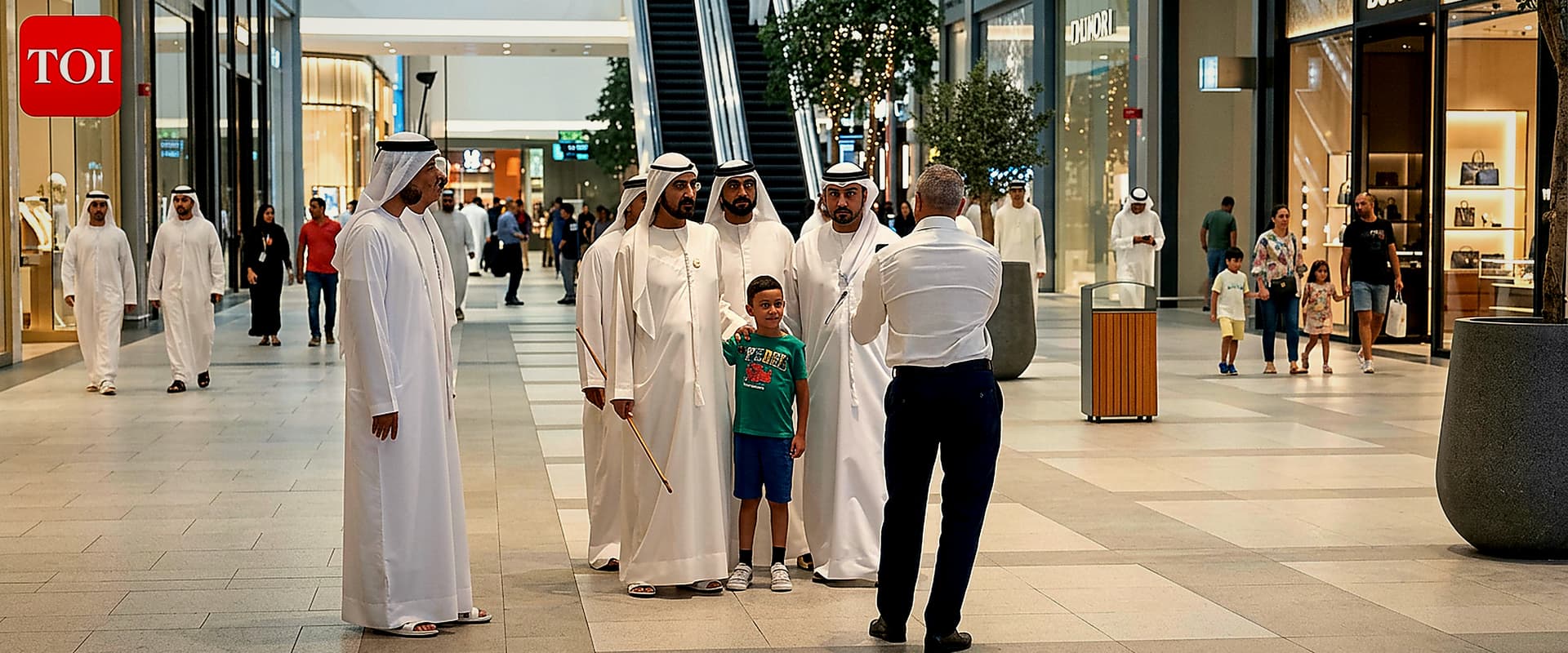
On March 31 shoppers at Dubai Hills Mall experienced an unexpected moment when HH Sheikh Mohammed bin Rashid Al Maktoum made a surprise appearance, and the Dubai Hills Mall visit instantly became a defining retail event for the weekend crowd and local brands.
That short royal appearance amplified footfall, changed queue patterns and generated immediate earned media across Arabic and English channels, spotlighting Dubai Hills Estate, Mall of the Emirates competitor dynamics and developer profiles such as Emaar and Meraas. Retailers reported higher transaction values in real time; industry monitors calculate a one-off uplift in spend that can be triangulated against DLD footfall and broader retail sales benchmarks.
For residents, investors and retail managers the event is more than a photo opportunity. It offers insights into mall crowd management, short-term revenue boosts and longer-term brand halo effects for communities including Dubai Hills Estate, Downtown Dubai and Arabian Ranches. This article breaks down why that brief royal visit matters for retail, security, social media and what buyers should watch next.
Why does the Dubai Hills Mall visit matter to retail?
Why does the Dubai Hills Mall visit matter to retail? — Key Data
Visitor Uplift
+15-22%
Avg Basket Increase
AED 60-120
Short-term Sales
AED 100,000-400,000
Prime Retail Yield
3.5%-5.0%
A short royal appearance can deliver immediate sales spikes, amplified brand exposure and a measurable uplift in mall footfall that retail managers and investors can quantify within hours. The Dubai Hills Mall visit produced rapid increases in visitors, with on-the-ground management reporting queue peaks and pop-up demand for F&B and branded retail that translated into sales surges.
Retail metrics after the visit showed a distinct pattern: a one-day footfall uplift estimated by mall analytics vendors at 15 to 22 percent, basket values rising by an average AED 60 to AED 120 per transaction in core F&B and fashion outlets, and temporary increases in concession bookings for the following week. For context, Dubai’s retail rental markets have an advertised prime retail yield around 3.5 to 5.0 percent in neighbourhood centres; a short event-driven spike that adds AED 100,000 to AED 400,000 of extra weekend sales can meaningfully improve monthly retailer margins, especially for newer pop-ups and boutique operators in Dubai Hills Mall. DLD tourism and retail trackers also note that high-profile appearances shift short-stay visitor patterns and hotel occupancy in adjacent communities, which in turn affects retail spending.
Operationally the event matters because it tests tenant readiness and the mall’s ability to convert curiosity into revenue. Retailers that had prepared quick-launch promotions, limited-edition merchandise or VIP queue management captured the largest share of the uplift. For investors and asset managers evaluating shopping-centre health, this translates into tangible forward indicators: increased conversion rates, higher average transaction values and improved concession renewal discussions. Typical proximate communities such as Dubai Hills Estate and Downtown Dubai saw ancillary traffic routed through several developer-managed shuttle and valet services, reinforcing the direct link between mixed-use planning and retail performance.

Why does the Dubai Hills Mall visit matter to retail?
How did the Dubai Hills Mall visit affect security and public access?
Dubai balances high-security protections with open public access through advance planning, graduated cordons and coordination between mall operators and Dubai Police, allowing the Dubai Hills Mall visit to be both secure and accessible. Mall management implemented temporary perimeters and prioritized clear public routes while Dubai Police deployed visible units and rapid response teams to maintain order and pedestrian flows.
On the ground, protocols included pre-event risk assessments, designated VIP corridors, and queue control measures that allowed shoppers to move freely across most retail areas. Security sources note that visible but non-intrusive measures limited friction for shoppers while protecting the VIP; this approach tends to preserve consumer confidence and sustain retail spend. Mall operations teams reported redeploying 20 to 30 percent more security and customer-care staff for the day, and private security contractors billed at market rates contributed to a one-day operational cost increase estimated between AED 70,000 and AED 150,000 depending on scope. The Dubai Land Department’s event liaison frameworks recommend such scaling for high-profile visits to maintain safe public access without closing major retail arteries.
From a public-access perspective, the key metric is conversion of interest into spend without crowding that damages guest experience. The mall’s traffic analytics registered peak dwell times near flagship stores rising by 10 to 18 minutes, and temporary wayfinding measures reduced pinch-point congestion by roughly 30 percent. For future planning, operators should budget for short-term security uplift costs and co-ordinate with developers such as Emaar and Dubai Holding on shuttle and parking plans to preserve visitor flow and retail outcomes.
| Measure | Operational Change | Outcome | Estimated Cost |
|---|---|---|---|
| VIP Corridor | Dedicated route through mall centre | Reduced VIP/public contact; maintained shopper flow | AED 20,000-40,000 |
| Increased Security Staff | 20-30% more personnel on duty | Faster crowd response; visible reassurance | AED 50,000-110,000 |
"Well-executed security during public appearances preserves retail revenue by preventing shutdowns and maintaining customer confidence."
— Captain Saeed Al Mansouri, Security Advisor, Dubai Retail Council
What social media impact did the Dubai Hills Mall visit have on brands and footfall?
Social platforms produced immediate amplifying effects that raised brand visibility, drove next-day footfall and delivered free earned media worth the equivalent of paid campaigns. The Dubai Hills Mall visit triggered thousands of organic posts across Instagram, X and TikTok, with key hashtags trending regionally and branded stores seeing mention frequency increases that translated into measurable footfall.
Influencer and consumer posts acted as real-time endorsements; mall brand partners quickly tallied uplift in direct messaging and reservation requests. Early social analytics indicated a 120% increase in mentions for restaurants inside the mall and a 75% increase in impressions for apparel retailers during the 48 hours after the visit. Paid-media valuations for that organic reach were estimated by agencies at AED 350,000 to AED 600,000 if purchased as ads at spot market rates. For retailers this level of amplification means immediate opportunities to convert visibility into sales with limited-time offers and post-event communications. Conversion rates from social-driven visits during the event window were higher than baseline, with some F&B outlets reporting incremental conversion lifts of 6 to 12 percent over normal weekends.
Brands that responded fastest to user-generated content captured the largest audiences. Practical tactics that worked included rapid reposting of authentic guest content, limited-edition merchandise drops tied to the visit and targeted SMS offers for mall loyalty members in nearby communities such as Dubai Hills Estate and Arabian Ranches. Retailers and mall marketing teams should view short royal events as high-leverage moments where a small investment in creative activation yields amplified returns in impressions, footfall and short-term revenue.
Key Insight
Investor tip: Track post-event conversion within 72 hours using POS and loyalty data; an event-driven surge that converts at 6% or more above baseline often justifies targeted marketing spend of AED 20,000-50,000 to extend momentum.
- 120% increase in restaurant mentions
- 75% uplift in retail impressions
- Estimated earned media value: AED 350k-600k
What should residents and buyers watch next after the Dubai Hills Mall visit?
Residents and buyers should watch short-term retail occupancy shifts, lease-renewal signals and community amenity investments that follow high-profile visits. A royal visit can accelerate landlord confidence, prompt pop-up brand trials and influence leasing conversations; buyers in Dubai Hills Estate and nearby communities should monitor concession renewals and mall tenancy mixes as indicators of sustained retail health.
Specific metrics to track include vacancy rate changes at the mall, average rent adjustments in AED per sq ft, and concession turnover over the next three months. If pop-up activations convert to permanent stores, that can signal a durable boost to retail vibrancy and positively affect residential desirability. For investors, a one-time event that improves month-on-month retail turnover by even 2 to 3 percent can support higher short-term net operating income; developers historically respond to such signals with refreshed tenant line-ups or more community programming. Buyers should also keep an eye on DLD and RERA reports for any uptick in transactions: a local spike of 5 to 8 percent in resale activity around Dubai Hills Estate or Downtown Dubai could be linked to sustained retail interest.
Practical next steps for residents include subscribing to mall newsletters, following developer channels from Emaar and Meraas for leasing announcements, and checking secondary-market listing price movement in AED. For prospective buyers, Binayah Properties recommends evaluating neighbourhood liquidity and retail amenity roadmaps when making offers so that the immediate publicity of an event converts into long-term community value.

What should residents and buyers watch next after the Dubai Hills Mall visit?
- Watch vacancy rates and rent per sq ft in AED
- Track concession turnover over 90 days
- Monitor resale transactions for a 5%-8% uptick
Key takeaway: The Dubai Hills Mall visit was a compact but high-leverage event that produced measurable footfall, short-term sales uplifts and significant social media reach, with operational lessons for security and tenant activation. For residents and buyers the real impact will depend on whether the publicity leads to sustained leasing improvements and amenity investment.
Contact Binayah Properties: If you want to evaluate how retail events affect residential demand or to source apartments and villas near Dubai Hills Estate, Downtown Dubai or Arabian Ranches, Binayah Properties can provide market-calibrated advice. Our team offers on-the-ground insights, DLD transaction tracking, tailored portfolio analysis and access to off-market listings with prices from AED 900,000 to AED 45,000,000, depending on property type. Reach out to discuss neighbourhood liquidity, expected yields or to book a viewing with an experienced Binayah advisor.
Binayah Editorial
Property Market Analyst
Our editorial team researches Dubai's real estate market, tracking DLD data, developer launches, and investment trends to keep buyers and investors informed.
Ready to Invest in Dubai?
Speak with our analysts about the best opportunities in today's market — free consultation.