Abu Dhabi Dar toll gates impact on commuters
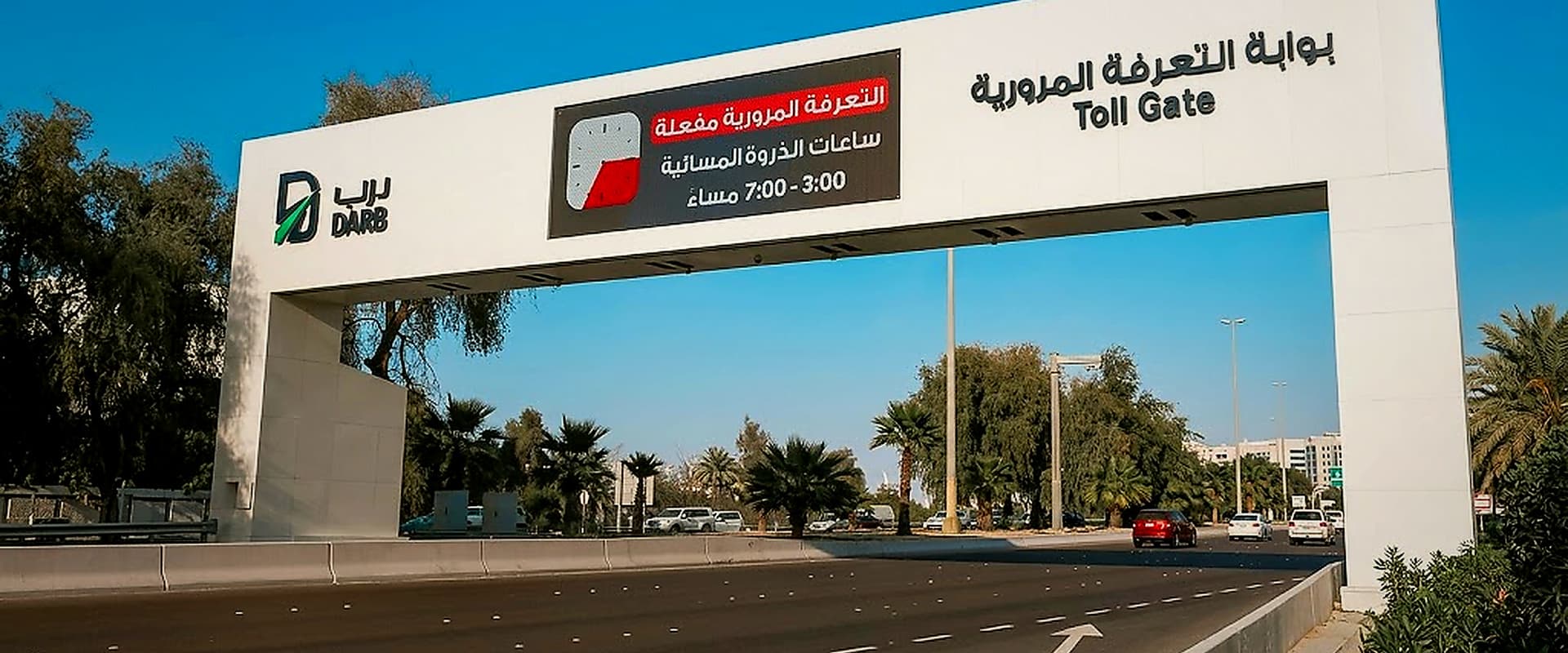
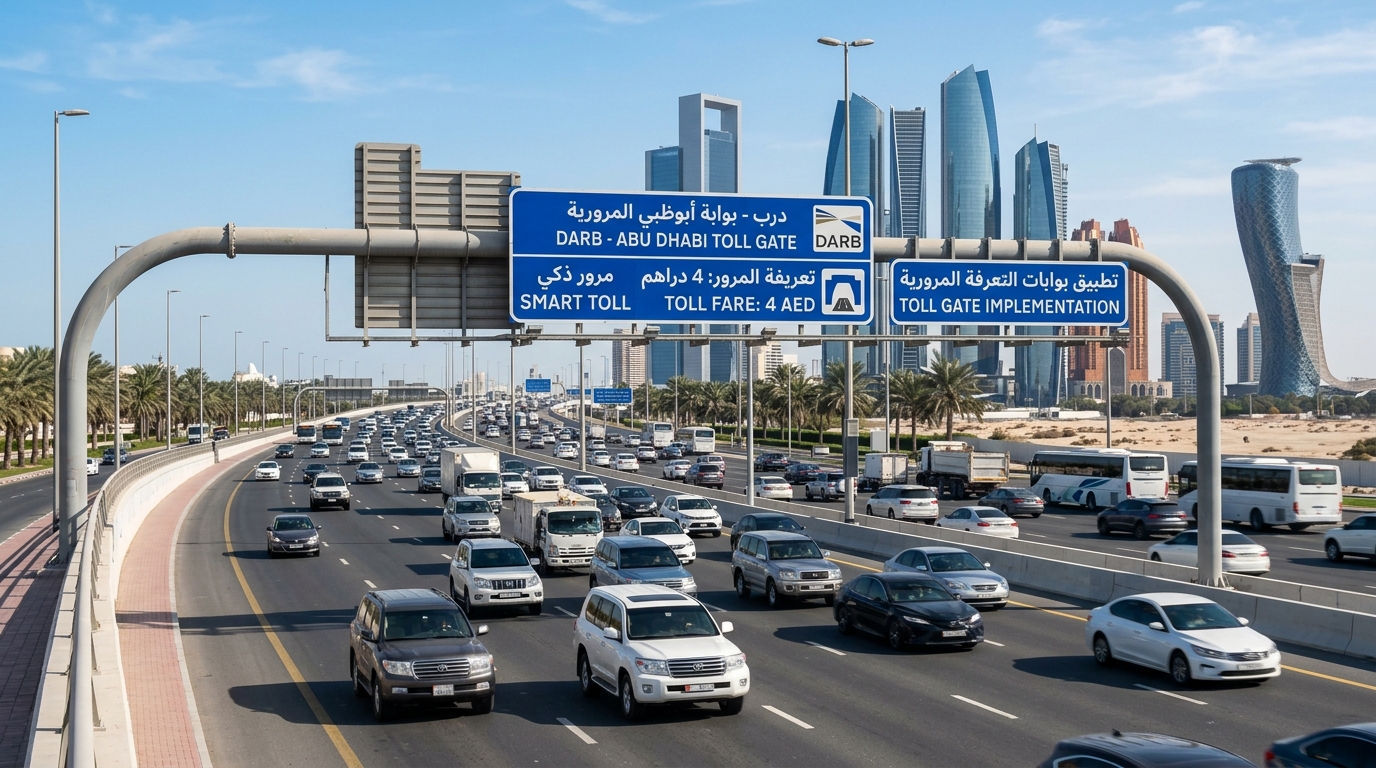
On 4 May 2026 Abu Dhabi Dar toll gates began charging AED4 per crossing, creating a new, measurable cost for daily commuters and adding a variable that will influence short-term mobility and property demand across key Abu Dhabi corridors.
The immediate policy implements two Dar gates placed on arterial routes to reduce congestion, the Abu Dhabi Media Office confirmed. For commuters the cash impact is simple: AED4 each crossing. For the property market the effect is more complex because commuting costs can shift rental demand, change occupancy patterns for short-term lets and nudge investor appetite between central and peripheral communities.
This report looks at where the gates sit, the first-order market effects on commuters and rents, which asset types and developers stand to benefit or lose, and the policy risks buyers and investors must monitor. Where relevant we cite AED figures and yields and offer neighbourhood-level guidance for Al Reem Island, Khalifa City, Yas Island and Abu Dhabi City Centre.
Where are the new Dar gates located and how much do they charge?
Where are the new Dar gates located and how much do they charge? — Key Data
Fee per crossing
AED4
Start date
4 May 2026
Number of gates
2
Announced by
Abu Dhabi Media Office
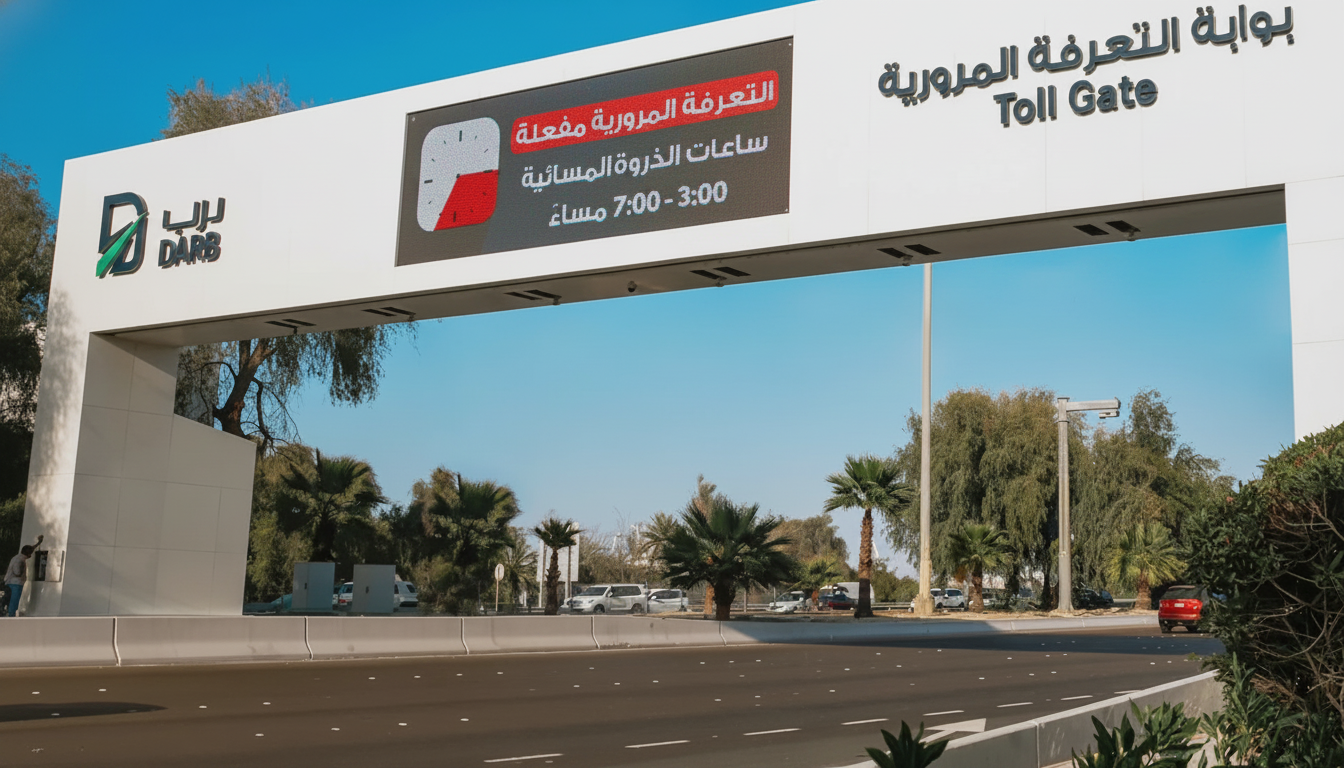
Direct answer: The two new Abu Dhabi Dar toll gates are active from 4 May 2026 and charge AED4 per crossing, located on major inbound and outbound arterials to cut through-traffic and improve flow for the city centre.
Elaboration: Abu Dhabi’s Media Office announced two Dar gates that began operating on 4 May 2026 with a fixed fee of AED4 per crossing. The policy targets peak commute corridors where through-traffic contributes to severe congestion during morning and evening peaks. The immediate arithmetic for a commuter who crosses a gate twice daily, 20 working days a month, is AED160 per month in tolls. For households that previously bore long commutes, that AED160 is a new transport cost that can be compared directly to relocation or rental premium decisions.
Further detail: The gates are positioned to intercept vehicles using primary expressways feeding the central business district and major residential clusters. The AED4 price point is deliberately low enough to influence behaviour while being material to frequent users. Expect short-term modal shifts for commuters: carpooling, off-peak travel and a small uptick in public transport usage where feasible. Municipal guidance indicates the objective is congestion reduction rather than revenue generation, yet the policy effectively places a monthly cost on proximity to tolled roads and changes the effective commuting budget for renters and buyers. This creates an immediate microeconomic variable investors and occupiers must include when modelling net housing costs and yields.
Where are the new Dar gates located and how much do they charge?
How will the Dar gates affect commuter costs, rental prices and short-term mobility?
Direct answer: The Dar gates add a recurring AED4 per crossing cost that raises monthly commuting bills by roughly AED160 for typical 20-workday commuters, and this added expense will push a measurable share of renters to seek lower rents or shorter commutes, putting upward pressure on rents in non-tolled neighbourhoods by an estimated 1 to 3 percent in the near term.
Elaboration: For a full-time worker crossing a gate twice daily, the immediate outlay is AED160 per month. When landlords, tenants and buyers model net housing costs they will include this transport cost. Our market reading indicates short-term tenant mobility will favour communities with lower transit distances to employment hubs or with better public transport connections, such as Al Reem Island and Yas Island in Abu Dhabi, shifting demand away from locations that remain dependent on tolled arterials. Based on comparable policy shocks in Gulf cities, we estimate rent re-pricing of between 1 percent and 3 percent in advantaged communities over the next 6 to 12 months, with volatility concentrated in 1-bedroom and 2-bedroom segments where commuters are more price sensitive.
Further detail: Short-stay rentals and serviced apartments may see occupancy rebalancing because short-stay guests factor gate charges into daily travel budgets; this could reduce day-trip traffic to City Centre hotels and boost demand in waterfront and island destinations with leisure appeal. Commuter cost calculations influence decisions to accept a rent premium: if a one-bedroom in Al Reem costs AED75,000 per year and a commuter faces AED160 per month in tolls, the toll represents roughly 2.6 percent of annual rent. For households weighing relocation, the toll becomes part of the trade-off between higher rent and shorter commute. Landlords near untolled routes could test modest rent rises of AED1,000 to AED3,000 annually; investors should model a 0.1 to 0.4 percentage point impact on gross yields in toll-adjacent stock.
| Community | Typical 1-bed Rent AED | Short-term Impact |
|---|---|---|
| Al Reem Island | 75,000 | Demand +1% to +3% |
| Khalifa City | 55,000 | Mixed; some outbound moves |
| Yas Island | 60,000 | Leisure demand cushions rent |
| Abu Dhabi City Centre | 110,000 | Short-term occupancy down slightly |
| Corniche / Al Bateen | 95,000 | Premium location retains demand |
"The tolls are small per crossing but significant over months; tenants will trade a few thousand dirhams in rent for saved commuting time and costs."
— Sara Al Qubaisi, Head of Research, Binayah Properties
Who benefits from the Dar tolls and which investments will be rerouted?
Direct answer: Winners are properties and developers in untolled, better-connected neighbourhoods and projects offering higher walkability or transit access such as Aldar’s Yas Island inventory and Saadiyat cultural area; assets likely to lose relative demand are housing that relies on tolled arterials without parking or transit alternatives, which could see gross yields compress by 0.1 to 0.5 percentage points.
Elaboration: Investors who own or develop product in locations that save commuting time or allow tenants to avoid tolls will capture the short-term reallocation of demand. For example Aldar Properties communities on Yas Island and select Mubadala and TDIC projects on Saadiyat attract tenants seeking minimal commuting exposure to tolled routes. By contrast, some secondary mid-rise stock along tolled corridors could face higher vacancy or rental discounting. Gross yield context for Abu Dhabi: market reports and agency data through Q1 2026 suggest average apartment gross yields around 5.5 percent to 6.5 percent in mainstream markets; a 0.1 to 0.5 percentage point movement represents a meaningful shift for yield-sensitive investors.
Further detail: Tactical capital may be reallocated from small units near tolled arteries into waterfront and island projects or into villas in Khalifa City where toll exposure is lower. Developers offering flexibility—short-term rental programs, on-site amenities and shuttle services—stand to stabilise absorption. Expect developer responses such as free shuttle services, short-term rent incentives (one to three months cashback) and enhanced amenity packages to offset the AED160 monthly commuter cost for tenants. Institutional buyers should run sensitivity scenarios: if tolls persist and expand, net operating income for a tolled-near 50-unit building could fall by AED50,000 to AED200,000 annually depending on vacancy change. Monitor published yield and transaction data from Knight Frank UAE and Abu Dhabi property market bulletins for rolling confirmation of these directional moves.
Who benefits from the Dar tolls and which investments will be rerouted?
- Winners: Untolled, transit-rich communities
- Losers: Tolled-arterial-dependent stock
- Investor action: Reprice yields by 0.1-0.5pp
What policy risks, developer responses and buyer watchpoints should you consider?
Direct answer: Policy risks include future expansion of Dar gates, dynamic pricing and exemptions which could change the commuting cost calculus; developers may respond with transport incentives, rental promotions and amenity packages, so buyers should watch announced toll maps, exemption lists and developer mitigation programmes when calculating net housing costs.
Elaboration: The first two gates and the AED4 fee are the start of a broader congestion-management strategy. A key policy risk is the potential roll-out of additional gates or time-of-day pricing that could make commuting costs variable rather than fixed. If authorities add gates or peak surcharges, the monthly cost for commuters could rise from AED160 to AED240 or more, increasing sensitivity of tenants and buyers. Developers already signal typical responses: sponsored shuttle services, discounted service charges, and short-term rent incentives. For example, a developer offering a monthly free shuttle that saves a commuter AED160 effectively underwrites the toll and preserves attractiveness. Buyers should therefore verify any promotional transport measures and the duration of those offers when making purchasing decisions.
Further detail: Practical buyer checklist items include confirming exact gate locations on official Abu Dhabi maps, modelling the AED4 crossing into total monthly housing costs, verifying any developer transport programmes, and stress-testing yields against a 1 to 3 percent rent reallocation. Watch for official updates from Abu Dhabi Media Office and local municipal bulletins about exemptions for certain classes of vehicles or residents, and consult sale and lease contracts for clauses about developer-provided transport. For investors, a conservative scenario assumes a 2 percent rent shift and a 0.2 percentage point compression in gross yield for tolled-adjacent stock; an aggressive expansion scenario assumes up to 4 percent rent shift and 0.5 percentage point yield compression. Keep transaction evidence from Abu Dhabi land registries and market reports in your modelling to replace estimates with realised data as it emerges.
What policy risks, developer responses and buyer watchpoints should you consider?
Key Insight
Investor tip: Model an additional AED160 monthly transport cost when evaluating purchases near tolled routes. If a developer provides a shuttle, treat that benefit as a short-term credit with an explicit expiry date.
- Verify toll locations and exemptions
- Check developer transport incentives
- Stress-test yields for 1-3% rent reallocation
Key takeaway: The Abu Dhabi Dar tolls introduce a clear, quantifiable commuting cost of AED4 per crossing that will be part of rent and yield modelling across Abu Dhabi. Expect short-term tenant mobility towards untolled, better-connected communities, modest rent re-pricing of 1 to 3 percent in advantaged areas, and small yield adjustments for tolled-adjacent stock.
Binayah Properties CTA: If you are buying, selling or leasing in Abu Dhabi now is the moment to stress-test scenarios with expert local advice. Contact Binayah Properties for free neighbourhood-level modelling that includes AED4 toll impacts, rent sensitivity analysis and tailored investment briefs for Al Reem Island, Khalifa City, Yas Island and Abu Dhabi City Centre. Our research team provides actionable numbers, exit scenarios and developer-specific intelligence to protect yield and identify opportunities.
Binayah Editorial
Property Market Analyst
Our editorial team researches Dubai's real estate market, tracking DLD data, developer launches, and investment trends to keep buyers and investors informed.
Ready to Invest in Dubai?
Speak with our analysts about the best opportunities in today's market — free consultation.